
Aluminum Utility Trailers
Showing 37–48 of 102 results
-
Aluminum Utility Trailers
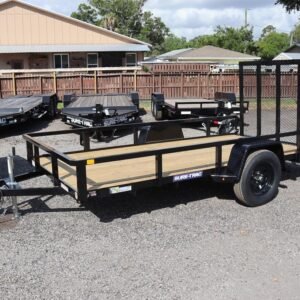
6×12 Tube Top Utility Trailer with 13″ Tall Sides
$2,790 Add to cart -
Aluminum Utility Trailers
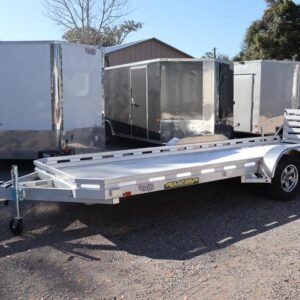
6×18 Aluminum Utility Trailer with Rear Stabilizer Jacks
$9,400 Add to cart -
Aluminum Utility Trailers
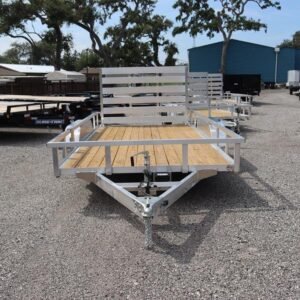
7 x 14 Aluminum Tube Top Utility Trailer – 7K Tandem Axle
$6,285 Add to cart -
Aluminum Utility Trailers

7 X 14 Aluminum Tube Top Utility Trailer with a 2k Jack
$6,235 Add to cart -
Aluminum Utility Trailers
7 x 14 Utility Trailer Torsion Axle by Paraiso (PG-113) — HIGH PLAINS TRAILERS
$2,499 Add to cart -
Aluminum Utility Trailers
7×10 Aluminum Low Side Utility 3k
$9,500 Add to cart -
Aluminum Utility Trailers
7×12 Aluminum Low Side Utility
$3,100 Add to cart -
Aluminum Utility Trailers
7×12 Aluminum Tube Top Utility Trailer
$3,100 Add to cart -
Aluminum Utility Trailers
7×12 Aluminum Tube Top Utility With Bi Fold Gate
$6,999 Add to cart -
Aluminum Utility Trailers
7×14 Aluminum Low Side Utility
$9,100 Add to cart -
Aluminum Utility Trailers
7×14 Aluminum Tube Top 7k
$6,000 Add to cart -
Aluminum Utility Trailers
7×14 Aluminum Tube Top ATV Utility Trailer with Side Ramps
$4,835 Add to cart
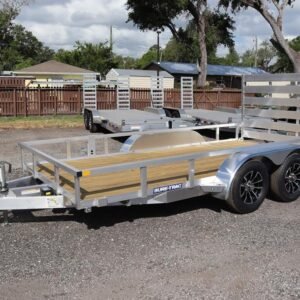
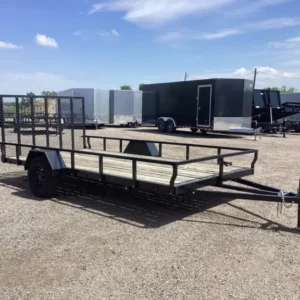
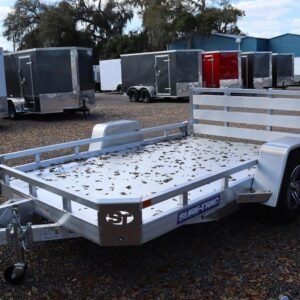
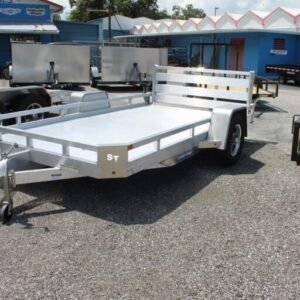
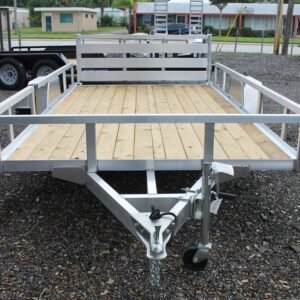
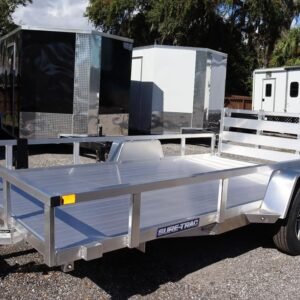
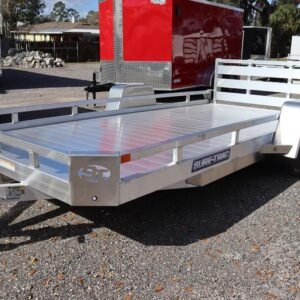
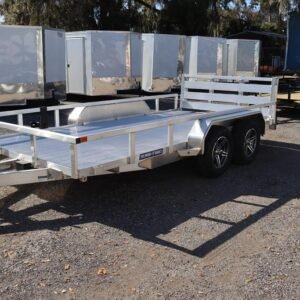
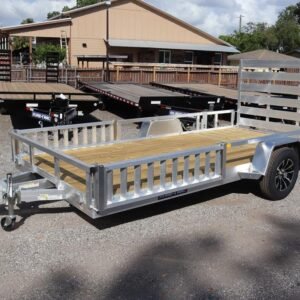
Aluminum Utility Trailer Sizes & Capacities
The entire case for aluminum is arithmetic. Every pound the trailer doesn't weigh is a pound of cargo you can legally carry, or a pound your tow vehicle doesn't have to drag. In a 7' x 14' tandem that difference is roughly 500–700 lb — a full pallet of material, or the margin that keeps a half-ton truck comfortably inside its tow rating. The table below shows the weight delta against a comparable steel build.
| Size | Axles | GVWR | Aluminum Empty Weight | Weight Saved vs. Steel |
|---|---|---|---|---|
| 5' x 8' single | 1 x 2,000–3,500 lb | 2,000–2,990 lb | 350–500 lb | ~200–300 lb |
| 6' x 10' single | 1 x 3,500 lb | 2,990 lb | 600–750 lb | ~250–350 lb |
| 6' x 12' single | 1 x 3,500 lb | 2,990 lb | 700–900 lb | ~300–400 lb |
| 7' x 14' tandem | 2 x 3,500 lb | 7,000 lb | 1,250–1,600 lb | ~500–700 lb |
| 7' x 16' tandem | 2 x 3,500–5,200 lb | 7,000–9,990 lb | 1,500–1,900 lb | ~600–800 lb |
| 8.5' x 18' tandem | 2 x 5,200 lb | 9,990 lb | 2,000–2,400 lb | ~700–1,000 lb |
| 8.5' x 20' tandem | 2 x 7,000 lb | 14,000 lb | 2,400–2,900 lb | ~800–1,100 lb |
Run the numbers against your own truck before deciding. If your payload sticker is tight, or you tow with an SUV or a mid-size pickup, the weight saved on an aluminum trailer is frequently the difference between legal and overloaded.
How to Choose the Right Aluminum Utility Trailer
Confirm it's actually all-aluminum
Plenty of trailers advertised as aluminum have steel crossmembers, a steel tongue, or steel fender brackets. Mixed construction is not automatically bad, but dissimilar metals in contact with road salt cause galvanic corrosion at the fasteners. Ask specifically what the frame, crossmembers, tongue, and ramp are made from.
Look for extruded, not folded, construction
Quality aluminum trailers use 6061-T6 extrusions for the main rails and interlocking extruded deck plank. Extruded members are stiffer per pound than bent sheet and hold their shape under repeated loading. Interlocking deck plank also drains and never needs replacing.
Check how the frame is joined
Aluminum welding is unforgiving — heat softens the metal in the area around the bead, so good builders design joints to keep welds out of the highest-stress zones or use bolted extrusion connections. Look for clean, consistent welds and gusseted tongue connections.
Match GVWR the same way you would with steel
Aluminum trailers use the same Dexter and Lippert axle ratings — 3,500 lb, 5,200 lb, 7,000 lb — and the same brake requirements apply. The metal changes the tare weight, not the axle math.
Think about how long you'll keep it
Aluminum trailers hold noticeably more of their value at resale, and the gap widens the older the trailer gets, because a ten-year-old aluminum trailer typically still looks and functions like a five-year-old one. Over a decade of ownership the price premium often washes out entirely.
Corrosion, Maintenance, and Where Aluminum Shines
Aluminum forms its own oxide layer, which is why these trailers survive winters in the salt belt and summers near the coast without the annual paint touch-up ritual that steel demands. There is no rust bleed staining the deck, no seized fasteners, and no scaling on the underside. The realistic maintenance list is short: check bearings annually, keep the lug torque right, and hose the frame after salted roads mostly to stop grime from trapping moisture in crevices.
The exceptions are worth knowing. Aluminum in direct contact with steel or with pressure-treated lumber can corrode at the interface, so builders use isolating washers or stainless hardware — check that yours did. Aluminum also has no fatigue endurance limit the way steel does, meaning a chronically overloaded aluminum frame will eventually crack rather than simply bend. Stay inside the GVWR and this is a non-issue; abuse it and you'll find the limit.
Where aluminum genuinely wins day to day: towing with a smaller vehicle, hauling on a fuel budget, loading and unloading by hand where a lighter tongue matters, marine and coastal use, and anywhere the trailer lives outdoors year-round with no cover. Where it doesn't: rock, scrap, demolition debris, and anything that gets dropped rather than placed — buy steel for that work.
Delivery & Buying Online
We deliver aluminum utility trailers throughout the lower 48 on flat-rate freight, quoted before you order and honored at delivery. Every purchase carries a 30-day guarantee. If you're weighing an aluminum model against a steel one, send us your tow vehicle and typical load and we'll do the payload math with you.
Related Categories
Compare directly against steel utility trailers, or read the side-by-side breakdown on the main utility trailers page. If your loads are machinery rather than materials, equipment trailers and tilt deck trailers are the next step up, and open car hauler trailers cover vehicle transport. Bearings, lights, and couplers are stocked under trailer parts.
Frequently Asked Questions
How much lighter is an aluminum trailer than a steel one?
An aluminum utility trailer typically weighs 25 to 35% less than an identically sized steel trailer. In a 7' x 14' tandem that's roughly 500 to 700 lb, and on an 8.5' x 20' it can exceed 1,000 lb. That saved weight becomes additional legal payload.
Do aluminum trailers rust?
Aluminum does not rust, because it forms a protective oxide layer instead of iron oxide. It can suffer galvanic corrosion where it contacts steel hardware or pressure-treated lumber, which is why good builders use stainless fasteners and isolating washers. Steel axles and springs on any aluminum trailer still rust normally.
Are aluminum utility trailers worth the extra cost?
They're worth it if you tow with a lighter vehicle, live where roads are salted, or plan to keep the trailer more than five years. Aluminum costs 30 to 50% more up front but holds substantially more resale value and eliminates rust maintenance. For heavy abuse and short ownership, steel makes more sense.
Can aluminum trailers carry as much as steel trailers?
Yes, and often more. Capacity is set by the axles, springs, and tires, which are the same components on both. Because the aluminum trailer weighs less empty, more of the GVWR is available for cargo, so an aluminum 7,000 lb trailer usually carries several hundred pounds more than its steel counterpart.
What alloy are aluminum trailers made from?
Most quality aluminum trailers use 6061-T6 extrusions for the frame rails, tongue, and deck plank, with 5052 sheet for fenders and panels. 6061-T6 offers the best combination of strength, weldability, and corrosion resistance for structural trailer members. Ask the builder to confirm the alloy if it isn't listed.
Can an aluminum trailer frame be repaired if it cracks?
Yes, but it needs a welder experienced with aluminum and the right filler alloy, which is less common than steel repair. Heat from welding softens the surrounding metal, so proper repairs often add a gusset or doubler. Extruded bolt-together designs simplify replacing a single damaged member.