
Hydraulic Dovetail Trailers
Browse hydraulic dovetail trailers for sale — the dovetail folds down under hydraulic power to create a low, continuous loading angle, so scissor lifts, pavers, and low-clearance equipment roll on without hanging up on ramps. Available in gooseneck and bumper-pull configurations with heavy GVWR ratings. Ships nationwide.
Showing all 9 results
-
Equipment Trailers
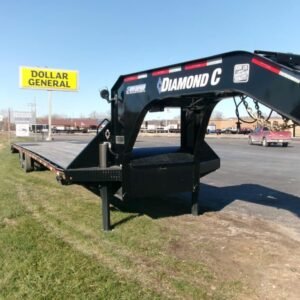
2024 Diamond C FMAX212 102″x 40′ 25.9k Equipment Trailer With MAX Ramps Gooseneck Trailers
$33,950 Add to cart -
Equipment Trailers
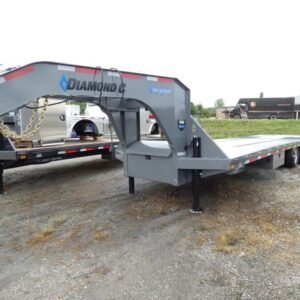
2025 Diamond C FMAX210 HDT 102″x 32′ 25k Hydraulic Dovetail Equipment Trailer with Aluma-Trax Flooring
$32,650 Add to cart -
Equipment Trailers
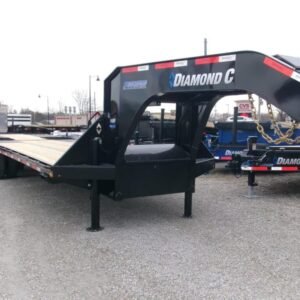
2025 Diamond C FMAX212 HDT 102″x 32′ 25.9k Hydraulic Dovetail Equipment Trailer Goose Neck Trailer
$29,700 Add to cart -
Equipment Trailers

2025 Diamond C FMAX212 HDT 102″x 32′ 25.9k Hydraulic Dovetail Gooseneck Gooseneck Trailer
$30,900 Add to cart -
Equipment Trailers
2025 Diamond C FMAX212 HDT 102″x 35′ 25.9k Hydraulic Dovetail Equipment Gooseneck Trailer
$31,400 Add to cart -
Equipment Trailers
2025 Diamond C FMAX212 HDT 102″x 35′ 25.9k Hydraulic Dovetail Equipment Trailer Stock With Aluma-Trax Flooring Goose Neck Trailers -…
$40,995 Add to cart -
Equipment Trailers
2025 Diamond C FMAX216 HDT 102″x 40′ 40k Hydraulic Dovetail Equipment Trailer Goose Neck Trailers
$50,250 Add to cart -
Equipment Trailers
2026 Diamond C FMAX210 2.0 32′ x 102″ Engineered Beam 25k W/ Hydraulic Dovetail
$24,488 Add to cart -
Equipment Trailers
2026 Diamond C FMAX212 HDT 102″x 32′ 25.9k Hydraulic Dovetail Equipment Gooseneck Trailer
$36,350 Add to cart
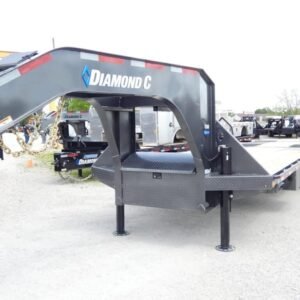
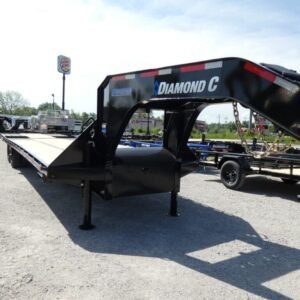
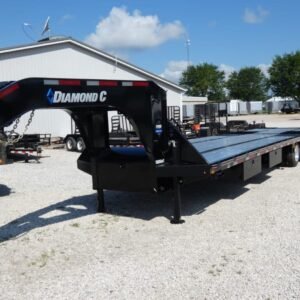
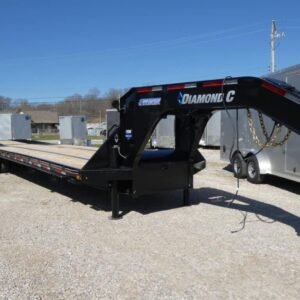
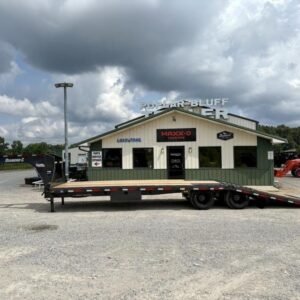
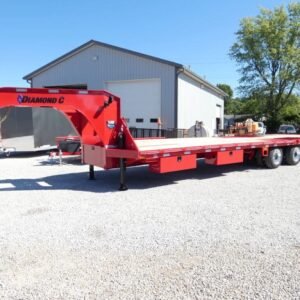
A hydraulic dovetail solves a problem equipment haulers have lived with forever: you can have a flat deck or you can have a gentle loading angle, but a fixed dovetail makes you choose. On these trailers only the rear section moves. Press a button and the tail lowers to the ground for a shallow drive-on approach; press it again and the tail folds up flush with the main deck, giving you a completely flat surface end to end for pallets, pipe, or a second machine. Nothing to store, nothing dragging, no permanent kick-up in the deck.
Hydraulic Dovetail Sizes & Capacities
Our current stock is concentrated in Diamond C's FMAX platform, where the model number steps with main beam height and rating. The pattern below reflects what we actually carry rather than a generic catalog range.
| Model class | Deck (flat + dovetail) | GVWR | Hitch | Typical dovetail length |
|---|---|---|---|---|
| Bumper-pull low profile (LPT-class) | 16' × 82" | 23,000 lb | 2-5/16" adjustable | 6'–8' |
| FMAX210-class (10" beam) | 32' × 102" | 25,000 lb | Gooseneck ball | 8' |
| FMAX212-class (12" beam) | 32'–35' × 102" | 25,900 lb | Gooseneck ball | 8'–10' |
| FMAX212-class, long deck | 40' × 102" | 25,900 lb | Gooseneck ball | 10' |
| FMAX216-class (16" beam) | 40' × 102" | 40,000 lb | Gooseneck ball | 10' |
Stated deck length includes the dovetail. A "32-foot" trailer with a 10-foot tail gives you 22 feet of flat deck ahead of the pivot plus 10 feet that is flat when raised and angled when deployed. That distinction matters when you are placing a long machine or trying to keep the tracks off the moving section.
The Hydraulic Power Unit and Dovetail Geometry
Nearly all of these run a self-contained 12-volt electric-over-hydraulic power unit with a deep-cycle battery in a lockable box on the neck, operated from a corded pendant or a wireless remote. The pump drives one or two cylinders that rotate the tail down to the ground and fold it back level. Charging comes off the tow vehicle through the 7-way, which means two things worth knowing before you buy: run the truck while you cycle the tail repeatedly, and check the battery any time the trailer has sat for a month. A dead battery is the single most common service call on these trailers, and it is almost always a charging habit rather than a component failure.
Deployed load angle typically lands in the 8 to 11-degree range depending on dovetail length and deck height, which is comparable to a tilt deck and dramatically shallower than the roughly 20 degrees you get from 5-foot slide-in ramps. Many units also carry flip-over ramps on the tail itself — often sold as max ramps or similar — which extend the approach for extremely low-clearance machines like a paver or a low-profile skid steer.
Two mechanical details separate a good hydraulic dovetail from a cheap one. First, how the tail locks when raised: a positive mechanical lock or an over-center geometry carries the load through steel, not through hydraulic pressure. You do not want a cylinder holding a raised tail under a pallet load. Second, the cross-member spacing and pivot bearing at the hinge, which absorbs every bit of shock when a tracked machine crosses the break. Ask about both.
Maintenance is short but non-negotiable: grease the hinge pins on schedule, inspect hose routing where it crosses the pivot for chafe, keep the reservoir topped, and keep the battery charged. Do all four and the mechanism outlasts the deck boards.
How to Choose the Right Hydraulic Dovetail Trailer
Decide whether you genuinely need the flat deck
If everything you haul drives on and off and you never carry pallets or long material, a tilt deck does the loading job with a simpler mechanism and less to maintain. The hydraulic dovetail earns its premium specifically when you need a flat, level deck between loading cycles.
Buy dovetail length for your worst machine
An 8-foot tail is fine for skid steers and compact tractors. A 10-foot tail is what you want for long-tracked equipment, low-clearance machines, and anything where the break-over angle is the constraint rather than the approach angle.
Rate the trailer against your truck, not just the load
A 25,900-pound gooseneck at capacity puts roughly 5,200 to 6,500 pounds of pin weight in the bed. That is a one-ton conversation. The 40,000-pound class is a medium-duty truck conversation. Work through GVWR, payload and tongue weight before you commit.
Beam height and deck construction
Taller main beams carry higher ratings and deflect less under a concentrated point load, which is what a mini excavator's tracks actually apply. Check crossmember spacing as well as beam depth — two trailers with identical GVWR can behave very differently under a machine parked in one spot.
Axles, brakes, and tires
Tandem 12,000-pound axles are typical at 25,900 pounds, moving to heavier axles or air ride at 40,000. Hydraulic disc or air brakes are worth specifying above 25,000 pounds. Cross-check pairings in our trailer axle capacity chart.
Delivery & Buying Online
We ship hydraulic dovetail trailers nationwide to the lower 48 with flat-rate freight quoted to your address before you buy, so the delivered price is set at the time of purchase. Every unit carries our 30-day guarantee. Send us your machine list and tow vehicle and we will confirm deck length, dovetail length, and pin weight all work together.
Related Categories
Compare against tilt deck trailers if a pivoting deck suits your loads better, or conventional ramp-loaded equipment trailers if budget is the priority. Straight-deck options live in gooseneck trailers and flatbed trailers. For machines that cannot tolerate any ramp at all, step up to a detachable gooseneck.
Frequently Asked Questions
What is a hydraulic dovetail trailer?
It is an equipment trailer whose rear section lowers hydraulically to the ground for loading, then folds up flush with the main deck for travel. Unlike a fixed dovetail, the deck is completely flat when the tail is raised, so you can haul pallets, pipe, and long material without a permanent kick-up at the rear.
How is a hydraulic dovetail different from a tilt deck?
On a hydraulic dovetail only the rear 8 to 10 feet moves and the main deck stays level throughout loading. On a tilt deck the entire deck pivots on a center hinge. The dovetail keeps a flat deck for mixed loads; the tilt is mechanically simpler with fewer components to maintain.
What powers the dovetail?
A self-contained 12-volt electric-over-hydraulic pump with a deep-cycle battery, usually in a lockable box on the gooseneck, driving one or two cylinders. It is operated by a corded pendant or wireless remote and charges from the tow vehicle through the 7-way connector while you drive.
What load angle does a hydraulic dovetail give?
Roughly 8 to 11 degrees with the tail deployed, varying with dovetail length and deck height. That is comparable to a tilt deck and far shallower than the approximately 20 degrees produced by 5-foot slide-in ramps. Optional flip-over ramps on the tail extend the approach further for very low-clearance machines.
What truck do I need for a 25,900 lb hydraulic dovetail?
A one-ton truck, realistically a dually. Pin weight runs 20 to 25 percent of the loaded trailer weight, so at capacity you are placing roughly 5,200 to 6,500 pounds in the bed before fuel and passengers. Check the door-jamb payload sticker rather than the advertised tow rating.
What maintenance does a hydraulic dovetail need?
Grease the hinge pins on schedule, inspect hydraulic hoses where they cross the pivot for chafing, keep the reservoir topped, and keep the battery charged. A discharged battery is by far the most common service issue and is usually a charging habit problem rather than a component failure.