
Roll Off Trailers
Shop roll off trailers for sale — hook-lift and cable-style dumpster trailers that load, haul, and dump 10 to 20 yard roll-off containers without a dedicated truck. A proven way to start or expand a dumpster rental, demolition, or junk removal business. Nationwide shipping available.
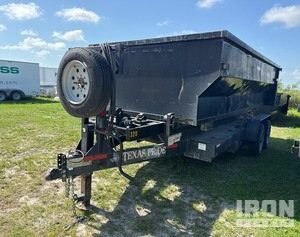
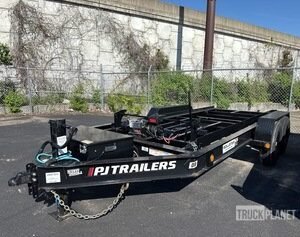
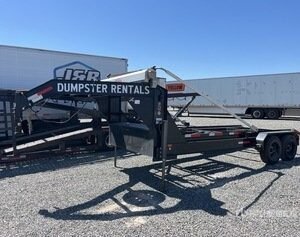
The point of a roll off trailer is that the bin stays and the trailer leaves. Back in, winch the container off onto the ground, drive away, and come back when it is full. A dump trailer makes you sit there while somebody loads it. A roll off turns one trailer into a container fleet, which is the entire business model behind junk removal, demolition cleanup, roofing tear-offs, and small-scale rental operations. If you are not planning to drop containers, you almost certainly want a dump trailer instead.
Roll Off Trailer Sizes & Capacities
Roll off trailers are specified by the trailer's own rating and the bin sizes the frame and hoist will handle. Bins are sold separately or as a package, and one trailer typically services several containers.
| Trailer class | GVWR | Hitch | Bin sizes handled | Typical operation |
|---|---|---|---|---|
| Tandem bumper pull | 14,000 lb | 2-5/16" ball | 10–14 cu yd | Cleanouts, light remodel debris |
| Heavy tandem bumper pull | 16,000 lb | 2-5/16" ball | 12–16 cu yd | Roofing tear-off, small rental fleet |
| Gooseneck tandem | 16,000–21,000 lb | Gooseneck ball | 14–20 cu yd | Multi-bin rental route |
| Heavy gooseneck | 23,900–25,900 lb | Gooseneck ball | 16–20 cu yd | Demolition, C&D, heavy debris |
Bin capacity in cubic yards is a volume measurement, not a weight rating, and confusing the two is how people destroy axles. A 14-yard bin weighs roughly 1,800 to 2,600 pounds empty on its own. On a 14,000-pound trailer weighing about 5,000 pounds, you have something like 6,800 pounds left for debris after the bin. Household junk and construction scrap will fill the volume long before you hit that. Broken concrete runs roughly 2,000 to 2,400 pounds per cubic yard, so a 10-yard bin of concrete reaches your axle rating at about a third full. Wet dirt and shingles behave similarly. Volume is what your customer sees; weight is what the scale sees.
Cable Hoist vs Hook Lift, and What Is in a Bin Package
Two mechanisms move containers, and they are not interchangeable — bins built for one will not work on the other.
Cable hoist
A hydraulic winch pulls a cable attached to the front of the bin while the trailer frame tilts, dragging the container up rails on rollers. Cable hoist is the common configuration on trailer-mounted roll offs. It is simpler, less expensive, and tolerant of bins that are slightly out of square or sitting on uneven ground. The cable and winch are wear items; expect to inspect the cable regularly and replace it on a schedule.
Hook lift
An articulating hook arm engages a hook bar welded to the front of the bin, lifts, and pulls it aboard. Hook lift is faster, cleaner, more precise for placing a container in a tight spot, and better at handling covered or lidded bins. It costs more and the bins cost more, since they need the hook bar geometry to match the arm.
The hydraulics on either system are typically a 12-volt electric-over-hydraulic power unit with a deep-cycle battery, running single or dual cylinders for the frame tilt plus the winch or hook circuit. Charging is through the tow vehicle's 7-way, and as with any 12-volt trailer hydraulic system, a flat battery is the failure you will actually experience. Keep it charged and keep the terminals clean.
When you price a package, confirm what is included: the trailer, how many bins, whether bins come with tarps and tarp rails, door style at the rear (barn doors versus a single swing gate), the winch or hook rating, and whether the frame has integrated stabilizer or outrigger legs. Also confirm bin door seals if you are hauling anything wet, because leaking bins are a permanent nuisance and sometimes a violation.
How to Choose the Right Roll Off Trailer
Match the trailer to the density of what you haul
Light, bulky debris such as household junk, cabinetry, and drywall means you should buy volume — larger bins on a moderate trailer rating. Concrete, dirt, roofing, and demolition waste mean you should buy rating — smaller bins on a heavier trailer. Buying the wrong side of that line makes the whole rig useless for your actual work.
Bumper pull or gooseneck
Bumper pull is simpler, tows behind more trucks, and maneuvers acceptably in residential driveways. Gooseneck carries more weight, backs more precisely, and is the right choice once you are running a route. Read gooseneck vs bumper pull if you are genuinely undecided.
Count bins, not trailers
The economics only work if the trailer is moving while containers sit at customer sites. Three to four bins per trailer is a common starting ratio for a rental operation. Confirm the bins you buy match the hoist type before anything ships.
Brakes and tires for a heavy, high load
Electric brakes on both axles minimum, and check brake laws by state for your operating area. Roll off loads sit high and shift, so tire load range and brake condition matter more here than on a low flat deck.
Frame and rail construction
Look at the rail material where the bin rollers ride, the cylinder mounting, and whether the tilt pivot is reinforced. Those three points absorb every cycle of a loaded container being dragged aboard.
Delivery & Buying Online
We ship roll off trailers and bin packages nationwide throughout the lower 48. Freight is quoted flat-rate to your address before purchase, so the delivered price does not move afterward. All units are covered by our 30-day guarantee. Tell us the material you haul and how many bins you plan to run, and we will spec the trailer and hoist to match.
Related Categories
If you do not need to drop containers, dump trailers are simpler and cheaper for the same debris. For hauling material without a hoist, see utility trailers and flatbed trailers. Container-handling operations should also look at container chassis and trailers and our shipping containers.
Frequently Asked Questions
What is a roll off trailer used for?
A roll off trailer carries and drops interchangeable containers, so the bin stays at the job site while the trailer leaves. That makes it the standard equipment for junk removal, demolition cleanup, roofing tear-offs, and dumpster rental businesses, where one trailer services several containers placed at different customer locations.
Roll off trailer or dump trailer: which do I need?
Buy a roll off only if you plan to leave containers behind and return later. A dump trailer is simpler, cheaper, and better if you stay with the trailer while it is loaded, then haul the load away immediately. Roll offs make economic sense once you run multiple bins per trailer.
How many cubic yards can a roll off trailer carry?
Trailer-mounted roll offs typically handle 10 to 20 cubic yard bins depending on trailer rating and frame length. Cubic yards measure volume, not weight, so heavy material will exceed the axle rating long before the bin looks full. Match bin size to the density of what you actually haul.
How much weight can I put in a roll off dumpster?
Less than the volume suggests when the material is dense. On a 14,000-pound trailer weighing about 5,000 pounds empty, a 1,800 to 2,600-pound bin leaves roughly 6,800 pounds for debris. Broken concrete runs 2,000 to 2,400 pounds per cubic yard, so a 10-yard bin hits the rating around a third full.
What is the difference between cable hoist and hook lift?
A cable hoist uses a hydraulic winch and cable to drag the bin up rails on rollers while the frame tilts. A hook lift uses an articulating arm that engages a hook bar on the bin. Hook lift is faster and more precise; cable hoist costs less and tolerates uneven ground better. Bins are not interchangeable between systems.
How many bins should I buy per roll off trailer?
Three to four bins per trailer is a common starting ratio for a rental operation, since the trailer only earns money when it is moving between drops. Confirm the bins match your hoist type, because cable hoist and hook lift containers use different attachment geometry and cannot be swapped.