
Food Trailers
Shop food trailers and concession trailers for sale — turnkey mobile kitchens ready to work. Units come with serving windows, stainless prep surfaces, sinks, exhaust hoods, and electrical hookups so you can pass health inspection and start serving. Ideal for food trucks, coffee carts, BBQ pits, and event vendors. Shipped nationwide.
Showing all 11 results
-
Food Trailers
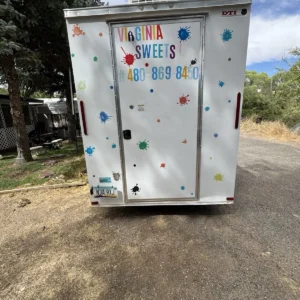
2022 Snow Cone Hot Dog Food Trailer Read For B Business
$23,000 Add to cart -
Food Trailers
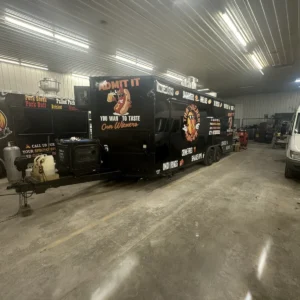
2024 empire concession trailer
$54,500 Add to cart -
Food Trailers
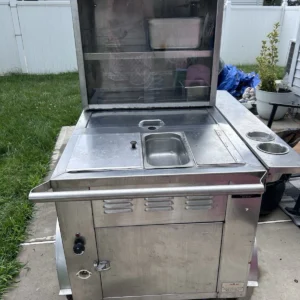
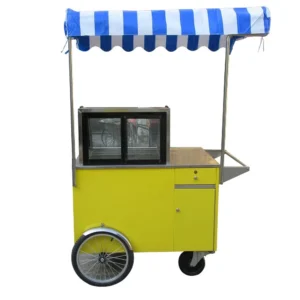
Hot dog wagon
$3,000 Add to cart -
Food Trailers

Hotdog Cart With Juice Dispenser
$2,350 Add to cart -
Food Trailers
Kolice Ice Cream Vending Tricycle Ice Cream Freezer Ice Cream Food Truck Trailer
$3,500 Add to cart -
Food Trailers
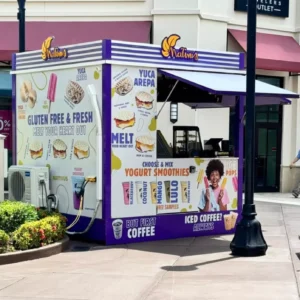
Mobile Kiosk – Food Truck 9.8FT X 9.8FT
$30,000 Add to cart -
Food Trailers
NEW FOOD TRAILER w/all the bells and whistles. 2021 CARGO Mate
$78,000 Add to cart -
Food Trailers
TURNKEY 2022 8.5 FT. WIDE X 14FT w/ PRO FIRE SUPPRESSION CONCESSION TRAILER
$28,500 Add to cart -
Food Trailers
Turnkey-Ready 8×16 Food Concession Trailer 2022 – Food Truck Equipment Available
$27,000 Add to cart -
Food Trailers
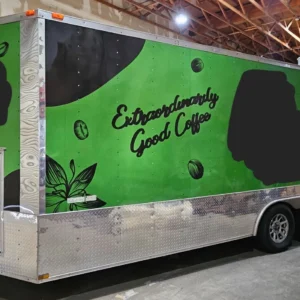
Used coffee concession trailers
$27,500 Add to cart -
Food Trailers
Used food truck
$50,000 Add to cart
A Commercial Kitchen That Tows
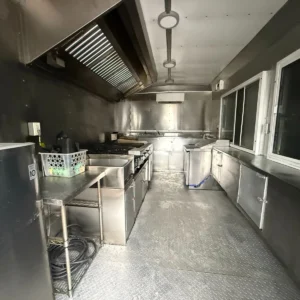
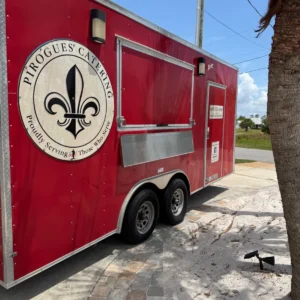
A concession trailer is not a cargo trailer with a window cut in it. It is a commercial kitchen built inside a towable shell, and everything that makes a restaurant kitchen work has to exist in 100 to 250 square feet: a serving window, cooking line, exhaust hood with fire suppression, a three-compartment sink plus a separate handwash sink, hot water, fresh and grey water tanks, refrigeration, washable wall and floor surfaces, an electrical distribution panel and usually a propane system. Get the build-out right and the trailer earns from day one. Get it wrong and you are rebuilding it before your first permit.
Our inventory covers the range: small single-menu units and hot dog carts, mid-size 8.5 x 14 and 8 x 16 concession trailers with fire suppression already installed, coffee trailers, and full turnkey builds.
Sizes and What Fits Inside
| Trailer size | Typical build-out |
|---|---|
| 6 x 10 / 6 x 12 | Single operator, one-item menu — hot dogs, shaved ice, coffee. One serving window, one cooking appliance or steam table, compact sinks, small water tanks, shore power or a small generator. |
| 7 x 14 / 8.5 x 14 | Two-person line. 4 ft hood over a flat top and single fryer, three-compartment plus handwash sinks, one reach-in cooler, roughly 30–45 gallons fresh water. |
| 8.5 x 16 | Two to three cooks. 6 ft hood, expanded prep counter, dedicated reach-in refrigeration, larger tanks, 50 amp service typical. |
| 8.5 x 20 | Full cooking line with multiple fryers or a char grill, 6–8 ft hood, multiple reach-ins or a small walk-in, onboard generator compartment. |
| 8.5 x 24 / 8.5 x 28 | Multi-station kitchen, separate prep and service zones, serious refrigeration, 100 amp panel, dedicated generator bay, sometimes two serving windows. |
| 8.5 x 32 | High-volume operation or multi-concept build. Approaches food-truck capability while remaining detachable from the tow vehicle. |
The single most common mistake is buying by price rather than by menu. Write the menu first, list every appliance it requires, add the sinks and refrigeration, then find the smallest trailer that holds it with room for two people to pass each other.
The Systems Behind the Serving Window
Serving windows
Window size and placement set your service speed. Concession windows commonly run 3 x 6 ft or 4 x 6 ft with a gas-strut awning that doubles as weather cover and a signage surface. Put the window on the curb side for the layout most event organizers expect, and keep the transaction point separate from the cooking line so an order handoff never crosses a fryer.
Exhaust hood and fire suppression
Grease-producing cooking equipment — fryers, griddles, char grills — normally requires a Type I hood with a fire suppression system over the line. Hoods are sized to the equipment beneath them, typically 4, 6 or 8 ft. Suppression systems are inspected and tagged on a recurring schedule. When buying used, ask when the system was last serviced and whether the tag is current; an expired system is a failed inspection and an unplanned expense.
Sinks and water
The standard build carries a three-compartment sink for wash, rinse and sanitize, plus a separate handwash sink, with hot water from an on-demand or tank heater. Fresh water capacity in a typical trailer runs 30 to 60 gallons, with a grey water tank that is larger. Many jurisdictions require grey capacity to exceed fresh — around 15% larger is a figure you will hear often — but that number is set locally, so verify it before you commit to a trailer.
Power and propane
Most trailers are wired for 30, 50 or 100 amp shore power with a breaker panel and GFCI-protected outlets. If you work events without hookups, you need a generator: 4 to 8 kW covers a trailer running fryers, refrigeration, lighting and point-of-sale, while a coffee or shaved-ice build gets by on less. A vented, isolated generator compartment keeps exhaust and noise out of the kitchen. Propane runs on 20, 40 or 100 lb cylinders in an exterior rack with a regulator, and the system gets leak-tested. Confirm both systems were installed by someone competent — this is the area where cheap used trailers hide their real cost.
How to Choose a Concession Trailer
- Start from the menu. Appliances drive hood size, hood size drives trailer length, and trailer length drives tow vehicle. Work in that order.
- Verify local health department requirements before purchase, not after. Requirements are written at the county or state level and genuinely differ. Call your inspector, describe the trailer, and ask what would fail.
- Check your tow vehicle honestly. A stocked 8.5 x 20 with full water, propane and equipment routinely runs 7,000 to 10,000+ lb. That is three-quarter-ton or one-ton territory, not half-ton.
- Inspect the systems on used units. Hood suppression tag date, water tank condition and odor, propane fittings, panel and wiring quality, floor beneath the sinks. Cosmetics are cheap; systems are not.
- Plan for power you will actually have. Most event organizers do not supply 50 amp. Assume you are bringing your own.
- Leave aisle room. Two people cannot work a line with less than about 30 inches of clear aisle. Cutting it to fit one more appliance costs you throughput every service.
Health Department Approval Is Local
There is no single national concession trailer code. Mobile food unit requirements are set by state and county health departments, and they diverge on the details that matter most: exact sink configuration, water tank capacities, hot water temperature, wall and ceiling finish materials, hood and suppression rules, commissary requirements and whether the unit must return to a base kitchen. A trailer that passes in one county can fail across the state line. Treat any general guidance — including ours — as a starting point, and get your specific requirements from the inspector who will be permitting you.
Delivery & Buying Online
We ship concession and food trailers nationwide throughout the lower 48. Freight is quoted flat-rate before you commit, and every unit is backed by our 30-day guarantee. Tell us the delivery ZIP and we will include the haul in the quote.
Related Categories
If you are converting a shell yourself rather than buying a finished build, start with an enclosed cargo trailer and outfit it. Vendors hauling equipment, tents and tables between events often add a utility trailer for the overflow. Fixed-location operators sometimes pair the trailer with a 20 ft shipping container for secure dry storage. Axles, brakes, jacks and lighting for the trailer are in trailer parts, and the full catalog is in our online trailer shop.
Frequently Asked Questions
What size concession trailer do I need?
Size to your menu and crew rather than your budget. A 6 x 12 handles a single-item menu with one operator; 7 x 14 to 8.5 x 16 fits a two-person line with a hood, fryer and flat top; 8.5 x 20 and larger supports a multi-station kitchen with substantial refrigeration and a generator.
What equipment does a food trailer need to pass health inspection?
Requirements are set by your local health department, not by any national standard, so verify yours before buying. Most jurisdictions look for a three-compartment sink, a separate handwash sink, hot water, fresh and grey water tanks, smooth washable surfaces, and a hood with fire suppression over grease-producing cooking.
How much water do food trailers hold?
Typical builds carry 30 to 60 gallons of fresh water plus a larger grey water tank. Many health departments require grey capacity to exceed fresh, commonly by around 15 percent, but the exact requirement is set locally. Confirm your county's figures before committing to a specific trailer.
Do I need a generator for a food trailer?
You need one if you work events without shore power, which most vendors do. A trailer running fryers, refrigeration and lighting generally needs 4 to 8 kW; coffee and shaved-ice builds need less. Look for a vented, isolated generator compartment so exhaust and noise stay out of the kitchen.
Should I buy a used or new food trailer?
Used turnkey trailers cut startup cost sharply and let you open immediately, but you inherit someone else's layout plus the condition of the hood, tanks and wiring. New builds cost more and take time to produce but match your menu exactly. Have any used unit professionally inspected first.
Can I tow a concession trailer with a half-ton truck?
Only the smallest units, and rarely a fully loaded build. A stocked 8.5 x 20 concession trailer carrying water, propane and equipment routinely weighs 7,000 to 10,000 lb or more, which requires a three-quarter-ton or one-ton truck. Compare the trailer's GVWR against your truck's tow rating and hitch.