
Flatbed Trailers
Browse flatbed trailers for sale — 16ft to 24ft steel flatbed trailers rated from 7,000 to 20,000 lbs GVWR. Features include I-beam main rails, full-length log chain rails, rub rails, diamond-plate decking, and flip-over ramps. Single, tandem, and triple axle configurations with electric brakes. Perfect for hauling lumber, steel, machinery, and construction materials. Order a flatbed trailer online with fast nationwide shipping.
Showing all 9 results
-
Flatbed Trailers
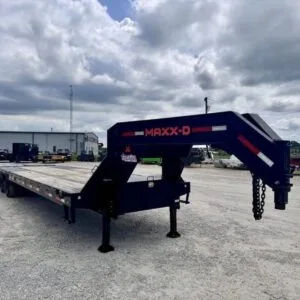
2021 Maxx-D Trailers LHX10234 102″ X 34′ 40K (Rated at 25.9k) Flatbed Gooseneck W/ MAXX Ramps
$3,007 Add to cart -
Flatbed Trailers
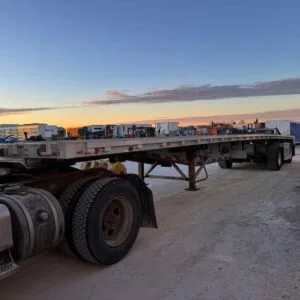
2021 Wilson af 1090
$30,500 Add to cart -
Flatbed Trailers
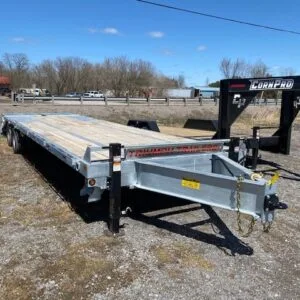
2023 Triumph 25′ Equipment Float
$23,995 Add to cart -
Flatbed Trailers

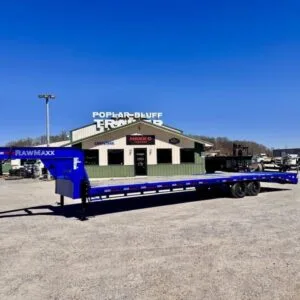
2024 RawMaxx *USED* 102″ x 34′ 12K Single Wheel Flatbed W/ Max Ramps
$13,000 Add to cart -
Flatbed Trailers
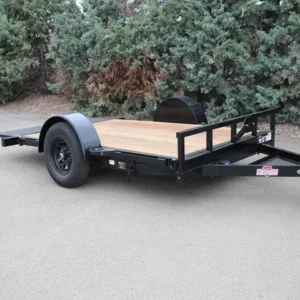
6.5 X 12 Single Axle Tilt 5K Trailer
$3,139 Add to cart -
Flatbed Trailers
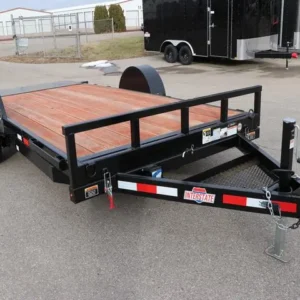
7 X 16 Full Bed Single Axle Tilt 7K Trailer
$4,399 Add to cart -
Flatbed Trailers
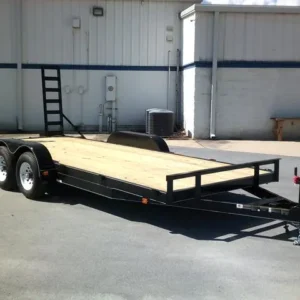
7 X 18 Carry-On Heavy Duty Equipment Trailer
$5,969 Add to cart -
Flatbed Trailers
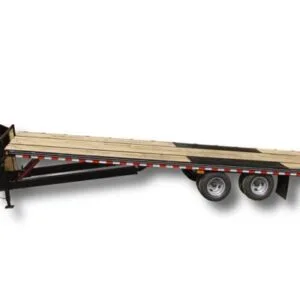
Deluxe 25000 GVWR Flatbed Tilt Gooseneck Trailer
$18,990 Add to cart -
Flatbed Trailers
Deluxe 25000 GVWR Flatbed Tilt Gooseneck Trailer – Two 12K
$22,990 Add to cart
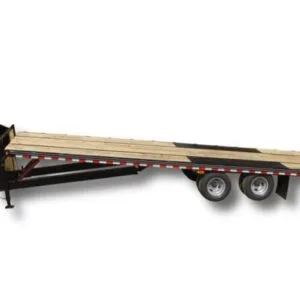
Flatbed Trailer Sizes & Capacities
"Flatbed" covers two very different machines. On the light end it means a deckover or pierced-beam trailer pulled behind a pickup, usually 20–40 feet with a 14,000–30,000 lb GVWR. On the heavy end it means a semi flatbed — a 48' or 53' highway trailer riding on a fifth wheel behind a Class 8 tractor, where the limit is the federal 80,000 lb gross combination weight rather than the trailer itself. Know which conversation you're in before you compare prices.
| Type | Deck Length x Width | Deck Height | GVWR / Rating | Realistic Payload |
|---|---|---|---|---|
| Bumper-pull deckover | 20' x 102" | ~34" | 14,000 lb | 9,500–10,500 lb |
| Gooseneck flatbed | 25' + 5' dovetail x 102" | ~34" | 23,900–25,900 lb | 16,000–18,500 lb |
| Gooseneck flatbed, tandem duals | 30' + 5' x 102" | ~36" | 30,000 lb | 20,000–22,500 lb |
| Semi flatbed, closed tandem | 48' x 102" | ~60" | 80,000 lb GCW | 45,000–48,000 lb |
| Semi flatbed, spread axle | 48' x 102" | ~60" | 80,000 lb GCW | 46,000–48,000 lb |
| Semi flatbed | 53' x 102" | ~60" | 80,000 lb GCW | 44,000–47,000 lb |
| Step deck / drop deck | Upper 11' + lower 37' x 102" | ~38–42" lower | 80,000 lb GCW | 44,000–48,000 lb |
Semi flatbed payload swings with tare weight. An all-steel 48' trailer scales around 10,000–12,000 lb empty; a combo (steel main beams, aluminum crossmembers and floor) runs 7,500–9,000 lb. Every pound you cut off the trailer is a pound of freight you can bill for.
How to Choose the Right Flatbed Trailer
- Deck height drives what you can legally haul. Standard highway height limit is 13'6" in most states. A 60" semi flatbed deck leaves you about 8'6" of cargo height; a step deck's lower level gains roughly 18–22" of that back. If your freight is tall, buy the drop deck.
- Choose deckover vs. pierced-beam by load width. A deckover puts the whole 102" deck above the tires — nothing to work around, ideal for pallets, lumber, and wide implements. Pierced-beam (between-the-fenders) sits 10–12" lower, which makes loading a tall machine easier and keeps the center of gravity down.
- Spread axle or closed tandem. Spread axles (typically 10' apart) let each axle carry up to 20,000 lb instead of sharing a 34,000 lb tandem allowance, giving more usable weight and better stability. The tradeoff is tire scrub in tight turns and restrictions in a handful of states.
- Match the ramp to the machine. A 5' dovetail with slide-in ramps loads wheeled equipment easily. Hydraulic tails eliminate the ramp angle problem entirely — see hydraulic dovetail trailers. For low-clearance machines, a tilt deck or a lowboy is the correct tool.
- Count the tie-down points. Cargo securement rules require an aggregate working load limit of at least half the cargo weight, plus one tie-down for every 10 feet of article length. Stake pockets, rub rails, D-rings, and winch tracks all count — make sure there are enough of them where you actually need them.
Frame, Decking, and Suspension
The mainframe is what you're buying. Pickup-pulled flatbeds use 6"–12" I-beam or channel mainframes with 3" channel crossmembers on 16" centers. Semi flatbeds are built around two tapered I-beams whose web depth is greatest at the center of the trailer, where bending load peaks. Beam depth, flange thickness, and crossmember spacing determine concentrated load ratings — a trailer rated 48,000 lb evenly distributed may only be rated for a fraction of that in a 10-foot span.
Decking options each solve a different problem. Nominal 2" hardwood (oak or apitong) is the standard: cheap to replace one board at a time and grippy under chained loads. Apitong resists rot and wear better than oak and is common on highway trailers. Extruded aluminum decking cuts several hundred pounds and never rots but costs more and can be slick. Steel deck is used where forklifts, coils, or hot loads are involved.
Suspension separates comfortable trailers from punishing ones. Spring suspension is cheap and durable. Air ride costs more, protects fragile freight, and lets you dump the bags to lower the deck or lift an axle. On pickup-pulled units, torsion axles ride better and have no moving leaf-spring parts; leaf springs are easier to service on the road and equalize load between tandems.
Brakes on semi flatbeds are air — typically 16.5" x 7" S-cam drums or air disc — and require an ABS system on trailers built since 1998. Pickup-pulled flatbeds run electric drum brakes, or electric-over-hydraulic disc on heavier gooseneck models where fade on long grades is a real concern.
Delivery & Buying Online
Flatbed trailers ship nationwide across the lower 48. Freight is quoted flat-rate before you place the order, and every unit is covered by our 30-day guarantee. Tell us the heaviest and tallest thing you plan to haul and we'll confirm the deck height, beam rating, and axle configuration that fits.
Related Categories
For pickup-towed hauling, compare with gooseneck trailers and equipment trailers. Low-clearance and oversize machinery calls for detachable gooseneck lowboys or tilt deck trailers. If your freight is containerized, look at container chassis and trailers. Decking hardware, axles, and brake components are stocked under trailer parts.
Frequently Asked Questions
How much weight can a 48ft flatbed trailer haul?
A 48ft semi flatbed typically hauls 45,000 to 48,000 lb of freight. The limit comes from the federal 80,000 lb gross combination weight: subtract roughly 17,000 to 20,000 lb for the tractor and 7,500 to 12,000 lb for the trailer. Lightweight combo trailers gain you several thousand pounds of billable payload.
What's the difference between a flatbed and a step deck?
A step deck has two deck levels, with the rear section dropping roughly 18 to 22 inches lower than a standard flatbed. That extra height clearance lets you haul taller freight legally under the 13'6" limit without a permit. A standard flatbed is one continuous deck at about 60 inches.
What is a spread axle flatbed and why use one?
A spread axle flatbed separates its two axles by roughly 10 feet instead of grouping them. Because they're spread, each axle can legally carry up to 20,000 lb rather than sharing a 34,000 lb tandem allowance, giving more usable payload and better stability. The tradeoff is tire scrub in tight turns.
How tall can a load be on a flatbed trailer?
About 8 feet 6 inches on a standard 48ft flatbed. Most states cap total vehicle height at 13'6", and a semi flatbed deck sits around 60 inches off the ground. A step deck's lower level gains you roughly 18 to 22 additional inches of cargo height.
How many straps or chains do I need on a flatbed load?
Federal rules require an aggregate working load limit of at least 50% of the cargo weight, with a minimum of one tie-down per 10 feet of article length and at least two on any article over 5 feet. Machinery over 10,000 lb needs a minimum of four direct tie-downs.
Is wood or aluminum decking better on a flatbed?
Wood is better for chained loads and cheap repairs; aluminum is better for weight savings. Apitong or oak planks grip chains, absorb damage, and replace one board at a time. Extruded aluminum decking saves several hundred pounds and never rots, but costs more and offers less friction.