
Detachable Gooseneck Trailers
Browse detachable gooseneck trailers for sale — RGN lowboys that drop the neck to the ground so tracked and low-clearance machines drive straight on, no ramps required. Available with hydraulic and mechanical detach systems, multi-axle configurations, and load ratings for excavators, dozers, and cranes. Nationwide heavy-haul delivery.
Showing all 5 results
-
Equipment Trailers
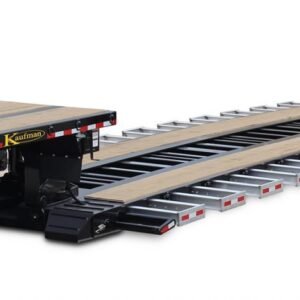
Detachable Gooseneck Ag Trailers
$69,780 Add to cart -
Equipment Trailers
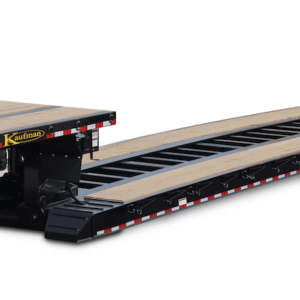
Detachable Gooseneck Commercial Trailers
$62,900 Add to cart -
Equipment Trailers
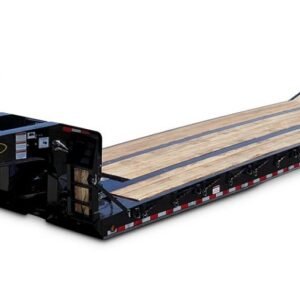
Detachable Gooseneck Paver Special Trailer
$69,620 Add to cart -
Equipment Trailers

Hydraulic Detachable Gooseneck Construction Trailers
$68,500 Add to cart -
Equipment Trailers
Lowboy Detachable Gooseneck Trailer – Fixed Neck
$68,500 Add to cart
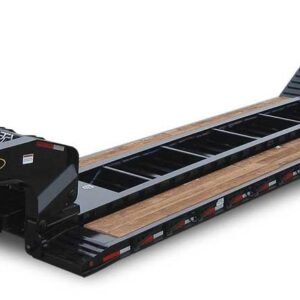
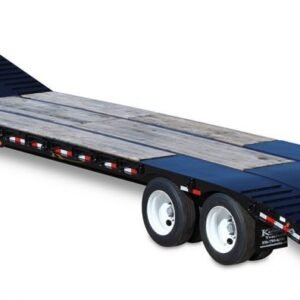
Read this part first, because it saves people money: a detachable gooseneck is not a pickup trailer. An RGN pulls behind a Class 8 tractor on a fifth wheel with a kingpin, not behind a ball in a truck bed. If you landed here looking for a heavy trailer for a dually, you want our ball-hitch gooseneck trailers instead. If you are running a tractor and moving dozers, excavators, cranes, or paving equipment, keep reading — this is the right page.
Detachable Gooseneck Sizes & Capacities
Lowboy capacity is quoted as a concentrated rating over a stated distance, written as something like "55 ton in 10 feet." That distance matters. A trailer rated 55 ton in 10 feet is not rated for 55 tons sitting on a single 3-foot footprint, and spreading the same load over 20 feet changes the answer again. Always match the rating convention to how your machine's weight actually sits on the deck.
| Class | Concentrated rating | Axles under the deck | Well (deck) length | Loaded deck height |
|---|---|---|---|---|
| Light construction RGN | 35 ton in 10' | 2 | 25'–27' | 20"–24" |
| Standard construction RGN | 50–55 ton in 10' | 3 | 26'–29' | 18"–22" |
| Heavy / paver special | 55–65 ton in 10' | 3 plus flip axle or booster | 26'–29' | 18"–22" |
| Ag and machinery deck | 35–50 ton | 2–3 | 28'–30' | 22"–26" |
| Fixed neck lowboy | 35–55 ton | 2–3 | 24'–29' | 18"–24" |
Overall length typically lands between 48 and 53 feet. Standard deck width is 8 feet 6 inches; widening decks that hydraulically or manually extend to 10 or 12 feet are common on machinery and paver trailers and put you into permit territory in most states.
How the Neck Actually Works — and Why It Matters
The defining feature is in the name. The gooseneck comes off. Detach it, the front of the deck sits down on the ground, and the machine drives straight onto the deck at effectively zero degrees. No ramps, no break-over angle, no dragging a low counterweight or a wide blade across a transition. For a long-tracked dozer or an excavator with limited approach clearance, that is not a convenience — it is the only way the machine gets loaded without damage.
Hydraulic detachable
The neck is powered by hydraulics fed from a wet kit on the tractor or a self-contained 12-volt power unit on the trailer. One operator can detach, load, and reconnect. It is faster, it is what most fleets buy, and it is the reason a hydraulic detachable commands a premium over a mechanical unit.
Mechanical detachable
Uses the tractor's own movement plus a mechanical linkage to separate and reset the neck. Fewer components to leak or fail, lower purchase price, and reliable in the hands of an operator who knows the sequence. It is slower and less forgiving on uneven ground.
Fixed neck
The neck does not come off at all. You load over the rear across a beavertail and ramps, exactly like a heavy equipment trailer. Fixed-neck lowboys are lighter, cheaper, and structurally simpler, and they make sense when your equipment tolerates a ramp angle. They are the wrong tool for a machine with low ground clearance.
Ground-bearing vs non-ground-bearing necks
A ground-bearing neck rests on the ground when detached, which is stable and simple. A non-ground-bearing neck holds itself up, so you can detach on soft or sloped ground and avoid tearing up a customer's asphalt. NGB is the upgrade worth paying for if you work in and out of finished sites.
How to Choose the Right Detachable Gooseneck
Rate the trailer to your heaviest machine, not your average one
A 35-ton trailer covers most rubber-tire equipment and mid-size excavators. Once you are moving a 60,000-pound-plus machine, you are in 50 to 55-ton territory with a tri-axle under the deck, and you should be planning for flip axles or a booster on your worst-case load.
Loaded deck height controls your permit life
Every inch of deck height is an inch of machine height that counts toward the 13'6" limit most states enforce without a permit. A 22-inch loaded deck under a 12-foot machine leaves you legal. A 26-inch deck under the same machine does not. Deck height is the single spec that determines whether a run is routine or a permit application.
Air ride vs spring ride
Air ride is easier on fragile freight, easier on the trailer's own frame, and gives you dump-and-lift capability that helps during detach. Spring ride costs less, needs less maintenance, and is genuinely tougher off-road. Site-heavy fleets often still choose springs on purpose.
Axle spacing, bridge law, and boosters
Getting weight onto the deck is the easy part. Getting it distributed legally across a bridge formula is the hard part. Flip axles and boosters add axles and spread the load rearward. Check state towing laws for your corridor before you buy, because the trailer that works in Arizona may not be the trailer that works across the state line.
Deck features you will actually use
Outriggers and removable stake pockets for over-width loads, a plank or steel deck, recessed D-rings and chain tie-downs across the well, and outboard-mounted tires so you can change one without unloading. Confirm the kingpin setting and the swing clearance against your own tractor before delivery.
Delivery & Buying Online
We sell and ship detachable goosenecks nationwide across the lower 48, quoted flat-rate to your address so there are no surprise freight adjustments after the sale. Every unit carries our 30-day guarantee. Because these trailers are tractor-specific, call us with your tractor's fifth wheel height, kingpin setting, and the heaviest machine you haul, and we will confirm the fit before anything ships.
Related Categories
If a ramp angle is acceptable for your machines, our equipment trailers and hydraulic dovetail trailers do the same job for far less money. For freight and material rather than machinery, look at flatbed trailers or container chassis. Keeping a machine running between jobs? We stock heavy equipment parts as well.
Frequently Asked Questions
What does RGN mean on a lowboy trailer?
RGN stands for removable gooseneck, meaning the front neck section detaches so the deck lowers to the ground and equipment drives on with no ramps. It is the standard solution for machines with low ground clearance or long tracks that cannot survive a ramp break-over angle.
Can I pull a detachable gooseneck with a pickup truck?
No. A detachable gooseneck connects to a fifth wheel with a kingpin and requires a Class 8 tractor, not a ball hitch in a pickup bed. Loaded weights routinely exceed 70,000 pounds. If you need a heavy trailer behind a one-ton truck, look at ball-hitch gooseneck or equipment trailers instead.
What does a rating like 55 ton in 10 feet actually mean?
It means the trailer is rated for 110,000 pounds concentrated within any 10-foot span of the deck. Spread the same weight over a longer span and capacity effectively increases; concentrate it into a shorter footprint and you exceed the rating. Match the convention to how your machine's weight sits on the deck.
What is the difference between a hydraulic and a mechanical detachable neck?
A hydraulic detachable neck is powered by the tractor's wet kit or an onboard power unit, letting one operator detach and reload quickly on uneven ground. A mechanical detachable uses the tractor's movement and a linkage. Mechanical costs less and has fewer failure points but is slower and less forgiving.
How low is the deck on a lowboy trailer?
Loaded deck height typically runs 18 to 24 inches depending on class, suspension, and tire size. That number is critical because it adds directly to your machine's height against the 13 feet 6 inch limit most states enforce. A few inches of deck height is often the difference between a routine run and a permit.
Do I need permits to haul on a detachable gooseneck?
Frequently yes. Standard legal limits are generally 8 feet 6 inches wide, 13 feet 6 inches tall, and 80,000 pounds gross, and loaded lowboys commonly exceed at least one. Widening decks, boosters, and tall machines all trigger permits, and requirements differ by state along your route.