
Enclosed Cargo Trailers
Showing 13–24 of 60 results
-
Enclosed Cargo Trailers
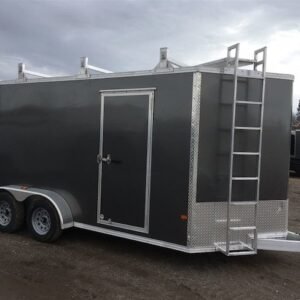
2023 Mission Trailers 7X16 Contractor Trailers
$19,700 Add to cart -
Enclosed Cargo Trailers
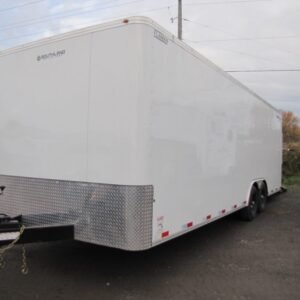
2023 Royal Cargo 8.5X24 Enclosed Trailers
$18,000 Add to cart -
Enclosed Cargo Trailers
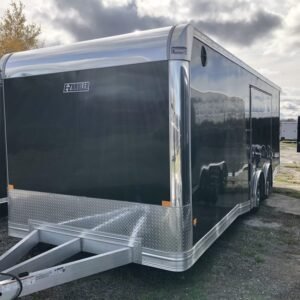
2023Mission Trailer 8×24 Car Hauler Cargo Trailer
$32,750 Add to cart -
Enclosed Cargo Trailers

2025 Alcom 8.5 x 16 EZ Hauler Enclosed Trailer **3″ extra height**
$14,195 Add to cart -
Enclosed Cargo Trailers
2025 Cargo Mate 5 x 8 Blazer Enclosed Trailer **GVWR 3k**
$4,495 Add to cart -
Enclosed Cargo Trailers
2025 Sun Coast 8 x 18 Landscape Enclosed Trailer 12k GVWR
$14,150 Add to cart -
Enclosed Cargo Trailers
2026 Cargo Mate 7 x 14 Challenger Enclosed Trailer **6″ Extra Height**
$7,295 Add to cart -
Enclosed Cargo Trailers
2026 Cargo Mate 7 x 14 E-Series Enclosed Trailer **UTV Package**
$7,795 Add to cart -
Enclosed Cargo Trailers
Sale!
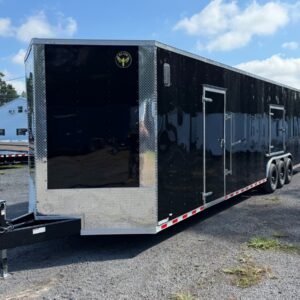
2026 Elite 8.5 x 36 Enclosed Cargo Trailer 21k GVWR
Original price was: $21,000.$19,350Current price is: $19,350. Add to cart -
Enclosed Cargo Trailers
2026 Hook & Line 8.5 x 16 Enclosed 10k Trailer
$8,500 Add to cart -
Enclosed Cargo Trailers
2026 Quality Cargo 7 x 16 Enclosed Cargo Trailer 7k GVWR
$6,250 Add to cart -
Enclosed Cargo Trailers
2026 Quality Cargo 8.5 x 20 Enclosed Cargo Trailer 7k GVWR
$6,950 Add to cart
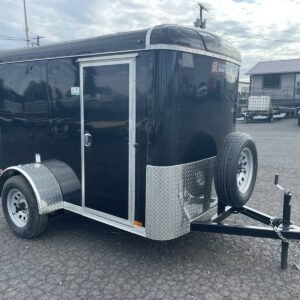
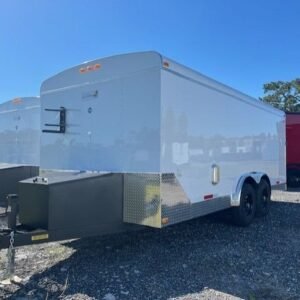
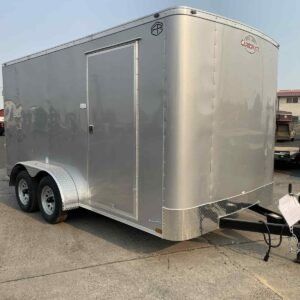
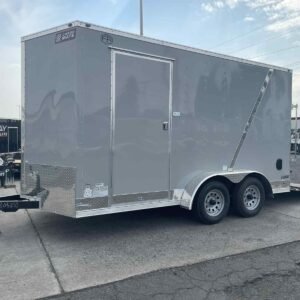
Enclosed Cargo Trailer Sizes & Capacities
Buying an enclosed cargo trailer comes down to three measurements people routinely get wrong: interior height, interior width between the wheel wells, and how much payload is left after the box itself is accounted for. An enclosed trailer weighs considerably more empty than an open one of the same footprint — walls, roof, and doors add up — so a 7' x 16' tandem with a 7,000 lb GVWR often carries less cargo than you'd guess.
| Size | Interior Height | GVWR | Empty Weight | Cargo Capacity |
|---|---|---|---|---|
| 4' x 6' single | ~4'6" | 2,000 lb | 600–750 lb | ~1,300 lb |
| 5' x 8' single | ~5'6" | 2,990 lb | 950–1,200 lb | ~1,800 lb |
| 6' x 12' single | 6'0"–6'3" | 2,990 lb | 1,300–1,600 lb | ~1,500 lb |
| 7' x 14' tandem | 6'3"–6'6" | 7,000 lb | 2,100–2,600 lb | 4,400–4,900 lb |
| 7' x 16' tandem | 6'6" | 7,000 lb | 2,400–2,900 lb | 4,100–4,600 lb |
| 8.5' x 20' tandem | 6'6"–7'0" | 9,990 lb | 3,200–3,900 lb | 6,100–6,800 lb |
| 8.5' x 24' tandem | 7'0" | 9,990–10,400 lb | 3,800–4,600 lb | 5,800–6,600 lb |
Nominal width is the exterior. An "8.5-foot" trailer measures roughly 100" outside and about 96" inside, dropping to 82"–83" between the wheel wells unless you order it with wall-mounted axles. A V-nose adds about 2 feet of usable floor at the front and cuts drag noticeably at highway speed.
How to Choose the Right Enclosed Cargo Trailer
Measure your tallest item, then add the ramp
Standard interior height on a 7-foot-wide trailer is around 6'3". If you plan to stand up inside, or roll a machine in on a ramp door, order additional height — most builders offer +6" or +12". The ramp itself eats a few inches of clearance at the doorway.
Ramp door or barn doors
Ramp doors are essential for anything with wheels: mowers, motorcycles, carts, dollies. Barn doors open in tight spaces, seal better in weather, and let you back a forklift right to the opening at a dock. Ramp doors add roughly 150–250 lb.
Check the wall framing spacing
Studs on 16" centers make a materially stronger, quieter wall than 24" centers, and give you far more places to anchor shelving and E-track. Ask the spacing on both walls and roof bows — a roof on 24" centers will oil-can and can't be walked on.
Screwed vs. screwless exterior
Screwless trailers use bonded .030 aluminum sheet with hidden fasteners: cleaner look, fewer leak paths, better for wraps and lettering. Screwed .024 or .030 sheet is cheaper and easier to patch, but the fastener line is the first place water finds its way in as the trailer ages.
Confirm the floor rating and tie-downs
3/4" plywood on 16" crossmembers handles general freight. If you're rolling equipment in, ask about a rated floor and factory-installed D-rings or E-track — adding them later means drilling through the floor and into the frame.
Construction Details That Decide How Long It Lasts
Tube-frame construction (square steel tube for the main frame, uprights, and roof bows) is stiffer and holds fasteners better than angle-iron framing, and it's the single biggest indicator of a trailer built to work rather than to hit a price. Aluminum-framed trailers cut 500–900 lb from a 7' x 16' and eliminate frame rust, which matters if the trailer lives outside in a salted climate.
Roofs are where enclosed trailers fail. A one-piece bonded aluminum roof with no seam down the middle is the durable option; seamed roofs and screwed roof caps need their sealant inspected every year. Walk the trailer's roofline at least annually and recaulk anything that has cracked — a small leak rots the wall panels and floor from the inside where you can't see it.
Interior finish matters more than buyers expect. 3/8" plywood or luan walls let you mount shelving anywhere; bare framing means every mount has to hit a stud. Vents are not optional if you're storing anything that offgasses or if the trailer sits in sun — a roof vent plus a sidewall vent moves enough air to stop condensation from soaking your cargo. LED interior lighting on a switch by the door beats a battery lantern every time.
Finally, look at the axle placement and tongue length. A tongue too short for a long trailer makes backing twitchy and increases the chance of a jackknife against the truck bumper. Axles placed too far rearward produce light tongue weight and highway sway — aim for 10–15% of loaded weight on the ball.
Delivery & Buying Online
Enclosed cargo trailers deliver to all 48 contiguous states with flat-rate freight quoted before purchase. Every unit is backed by our 30-day guarantee. Give us your cargo dimensions and tow vehicle and we'll confirm interior height, door style, and GVWR before you order.
Related Categories
Hauling vehicles under cover calls for enclosed car hauler trailers with their taller boxes and beavertail floors. If you're building out a mobile kitchen, start with food trailers. For open hauling at a lower price, see utility trailers, and for secure ground-level storage rather than towing, compare shipping containers. Doors, vents, and axles are under trailer parts.
Frequently Asked Questions
How much can a 7x16 enclosed cargo trailer hold?
A 7' x 16' tandem-axle enclosed trailer with a 7,000 lb GVWR carries roughly 4,100 to 4,600 lb of cargo, since the trailer itself weighs 2,400 to 2,900 lb empty. Interior volume is about 700 cubic feet with a standard 6'6" ceiling, or more with a V-nose.
How wide is the inside of an 8.5 ft enclosed trailer?
About 96 inches wall to wall, narrowing to 82 to 83 inches between the wheel wells. The 8.5-foot figure is the exterior width, roughly 100 inches. If you need full width at floor level for pallets, order wall-mounted or torsion axles that keep the wells out of the box.
Is a V-nose cargo trailer worth it?
Yes for most buyers. A V-nose adds roughly 2 feet of usable floor space at the front, reduces aerodynamic drag enough to be noticeable on highway fuel economy, and sheds crosswind better. It costs slightly more and makes the trailer a foot or two longer overall for parking purposes.
What interior height do I need to stand up in a cargo trailer?
Order at least 6'6" interior height, and 7'0" if you're over six feet tall or will be wearing a hard hat. Standard height on a 7-foot-wide trailer is about 6'3". Most manufacturers offer plus-6-inch and plus-12-inch height packages on 8.5-foot-wide models.
Should I get a ramp door or barn doors?
Get a ramp door if anything with wheels goes in and out: mowers, bikes, carts, or equipment. Choose barn doors if you load by hand or at a dock, need to open in tight spaces, or want the better weather seal. Ramp doors add roughly 150 to 250 lb.
Do enclosed cargo trailers leak?
They leak at seams, screw lines, and roof caps as the sealant ages, not through the panels. A one-piece bonded aluminum roof with no center seam is the most leak-resistant design. Inspect and recaulk the roofline, corner caps, and door frames annually to prevent water rotting the walls from inside.