
Equipment Trailers
Showing 49–60 of 65 results
-
Equipment Trailers
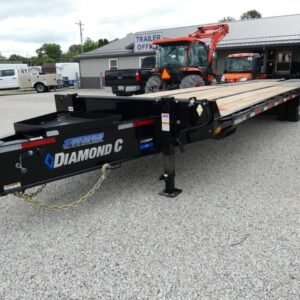
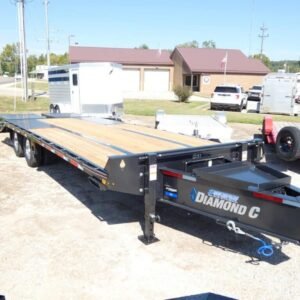
2025 Diamond C PX212 102″x 30′ 25.9k Pintle Ring Hitch Equipment Trailer With MAX Ramps
$24,995 Add to cart -
Equipment Trailers
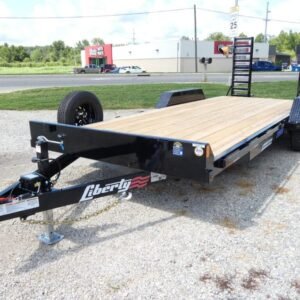
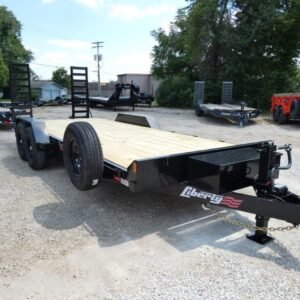
2025 Liberty LE 83″x 20′ 9.9k Equipment Trailer With Stand-Up Ramps
$5,400 Add to cart -
Equipment Trailers
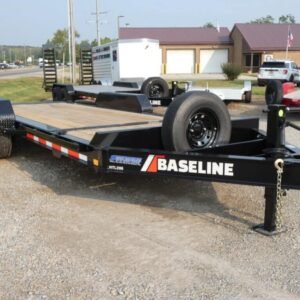
2026 Baseline HTL208 82″x 20′ 16k Split-Deck Tilt Equipment Trailer
$11,550 Add to cart -
Equipment Trailers

2026 Baseline HTL208 82″x 22′ 16k Split-Deck Tilt Equipment Trailer
$11,800 Add to cart -
Equipment Trailers
2026 Diamond C FMAX210 2.0 32′ x 102″ Engineered Beam 25k W/ Hydraulic Dovetail
$24,488 Add to cart -
Equipment Trailers
2026 Diamond C FMAX212 HDT 102″x 32′ 25.9k Hydraulic Dovetail Equipment Gooseneck Trailer
$36,350 Add to cart -
Equipment Trailers
2026 Diamond C HDT207 82″x 20′ 14.9k Split-Deck Tilt Equipment Trailer
$12,500 Add to cart -
Equipment Trailers
2026 Diamond C HDT207 82″x 22′ 14.9k Split-Deck Tilt Equipment Trailer
$12,900 Add to cart -
Equipment Trailers
2026 Diamond C PX210 102″x 25′ 25k Pintle Ring Hitch Equipment Trailer With MAX Ramps
$20,995 Add to cart -
Equipment Trailers
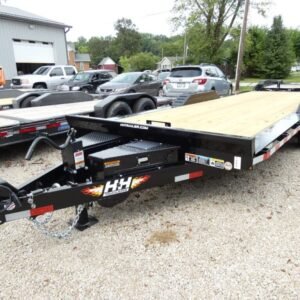
2026 H & H HEX 102″x 22′ 14k Electric Tilt Trailer With MAX Wide Pkg.
$11,250 Add to cart -
Equipment Trailers
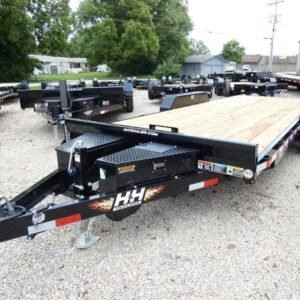
2026 H & H HEX 82″x 20′ 7k Electric Tilt Trailer
$7,450 Add to cart -
Equipment Trailers
2026 Liberty LE 83″x 20′ 14k Equipment Trailer With Stand-Up Ramps
$6,500 Add to cart
Equipment Trailer Sizes & Capacities
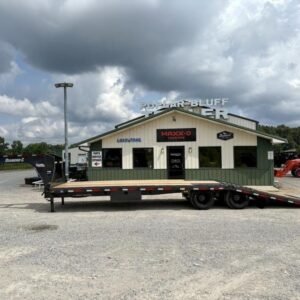
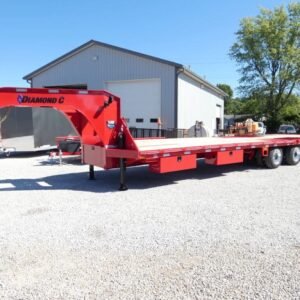
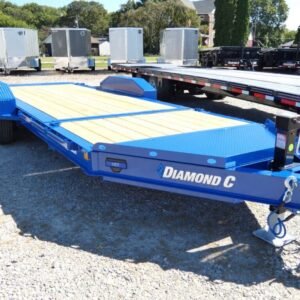
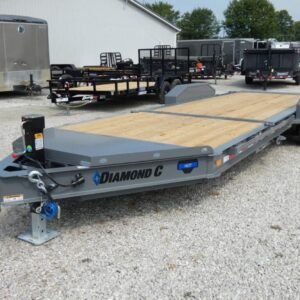
Equipment trailers exist for one job: getting a machine on and off the deck safely, then carrying it down the road without drama. That's why they're built low, wide between the fenders, and heavy in the frame, with a dovetail and stand-up ramps at the back. The critical spec is not the deck length — it's the axle rating and how much of the GVWR is left after the trailer's own weight.
| Configuration | Deck (flat + dovetail) | Between Fenders | GVWR | Payload |
|---|---|---|---|---|
| Bumper pull, 2 x 5,200 lb | 14' + 2' | 82" | 9,990 lb | 7,100–7,700 lb |
| Bumper pull, 2 x 7,000 lb | 16' + 2' | 82" | 14,000 lb | 10,200–11,000 lb |
| Bumper pull, 2 x 7,000 lb | 18' + 2' | 82" | 14,000 lb | 9,900–10,700 lb |
| Bumper pull, 2 x 8,000 lb | 20' + 2' | 83" | 16,000 lb | 11,300–12,200 lb |
| Gooseneck, 2 x 10,000 lb | 20' + 5' | 83" | 23,900 lb | 16,500–18,000 lb |
| Gooseneck, 2 x 12,000 lb | 25' + 5' | 83" | 25,900–30,000 lb | 18,000–22,000 lb |
Compare that to real machine weights before you buy. A compact track loader with a bucket runs 8,000–11,500 lb. A 5-ton mini excavator is 11,000–12,500 lb with a thumb. A 50–60 hp compact tractor with a loader and box blade is 6,500–8,500 lb. Add attachments riding on the deck and it's easy to blow past a 14,000 lb trailer with a machine you thought was "about 10,000 pounds."
How to Choose the Right Equipment Trailer
- Buy one axle class above your current machine. Equipment gets heavier over time, not lighter, and the price gap between 7,000 lb and 8,000 lb axles is small compared to buying a second trailer in three years.
- Measure between the fenders, not the overall width. 82"–83" clear is the standard and fits most skid steers and compact tractors. Anything wider than that has to ride on a deckover or a flatbed trailer.
- Check the load angle. A 2-foot dovetail with 5-foot slide-in ramps gives a workable angle for wheeled machines but is often too steep for low-clearance equipment or a machine on tracks with a long fixed frame. If you scrape ramps regularly, look at tilt decks or a hydraulic dovetail.
- Decide bumper pull or gooseneck. Bumper pull is simpler, cheaper, and fits any pickup with a receiver. Gooseneck puts the pin weight over the rear axle for far better stability and unlocks GVWRs above 16,000 lb — see gooseneck trailers.
- Insist on brakes on every axle. Stopping 14,000 lb on one braked axle is genuinely dangerous on a grade. Electric-over-hydraulic disc brakes are worth the upcharge on anything over 14,000 lb GVWR if you tow in hilly country.
- Count the D-rings. Machinery over 10,000 lb requires at least four direct tie-downs, plus separate securement for any accessory or attachment that moves. Frame-mounted D-rings are the only ones that count — rings welded only to the deck plate are not securement points.
Frames, Ramps, and Braking Systems
Look under the trailer. Equipment trailers are built on channel or I-beam mainframes — 6" channel at 14,000 lb, 8"–12" I-beam on gooseneck models — with 3" channel crossmembers on 16" centers. The difference between a trailer that stays flat and one that develops a permanent sag under a track loader is beam depth and crossmember spacing, not paint quality.
Ramp design is the feature you'll interact with every single day. Slide-in ramps store under the deck and are the lightest option but have to be manhandled into position. Stand-up ramps fold vertically at the rear, are always with the trailer, and double as a rear bulkhead — but they add wind drag and weight. Spring-assist or torsion-assist ramps take most of the effort out of both. Knee ramps and mega ramps flatten the load angle for long, low machines.
Dovetails are a compromise: they cut the load angle but the sloped section can't be used for flat cargo and drags on steep driveway aprons. A hydraulic dovetail folds the tail flat to the ground for a 7–10 degree approach and then lies flush with the deck for hauling — the best of both, at a real cost premium.
Suspension is typically leaf spring with slipper or double-eye ends. Slipper springs handle heavy, shock-loaded work better and are simpler to replace; double-eye springs ride slightly smoother. On heavier gooseneck equipment trailers, air ride and torsion options exist but leaf springs remain the practical standard because they're serviceable in any shop in the country.
Delivery & Buying Online
We deliver equipment trailers to every state in the lower 48 on flat-rate freight quoted before checkout. All units carry a 30-day guarantee. Send us the make and model of the machine you're hauling and we'll confirm the axle rating, deck width, and ramp style that fits it properly.
Related Categories
Step up to gooseneck trailers for higher GVWR and better towing manners, or to detachable gooseneck lowboys for machines too tall or heavy for a deck trailer. Solve loading-angle problems with tilt deck trailers or hydraulic dovetail trailers. For lighter loads, see utility trailers, and find replacement ramps, D-rings, and axles under trailer parts.
Frequently Asked Questions
What size equipment trailer do I need for a skid steer?
A 14,000 lb GVWR trailer with a 16' + 2' deck handles most wheeled skid steers, which run 6,000 to 8,500 lb. For a compact track loader at 8,000 to 11,500 lb plus attachments, move up to a 16,000 lb trailer or a gooseneck to keep real payload margin.
Do I need a CDL to tow a 14,000 lb equipment trailer?
Not for personal use in most states, since the trailer is over 10,000 lb but combined weight typically stays under 26,001 lb. A CDL is generally required when the trailer exceeds 10,000 lb and combined rating exceeds 26,001 lb. Commercial use adds DOT number and medical card requirements at lower thresholds.
How wide is the deck between the fenders on an equipment trailer?
Standard clear width between fenders is 82 to 83 inches, which fits most skid steers, compact track loaders, and compact tractors. Machines wider than that must ride on a deckover or flatbed trailer where the deck sits above the tires. Always measure at the widest point, including tracks.
What's a dovetail on an equipment trailer?
A dovetail is a sloped section at the rear of the deck, typically 2 feet on a bumper pull or 5 feet on a gooseneck, that reduces the ramp angle when loading. It makes loading easier but can't carry flat cargo and may drag on steep driveway aprons.
Are stand-up ramps better than slide-in ramps?
Stand-up ramps are more convenient because they're always attached and fold vertically out of the way, and they double as a rear bulkhead. Slide-in ramps weigh less and create no wind drag, but you have to lift and position them each time. Spring-assist versions reduce the effort on either style.
How many chains do I need to secure a machine on a trailer?
At least four direct tie-downs for any machine over 10,000 lb, secured to frame-mounted points at the front and rear. Any attachment, boom, or accessory that can move must be secured separately. Total working load limit of all tie-downs must be at least half the machine's weight.