
Shipping Containers
Showing 49–52 of 52 results
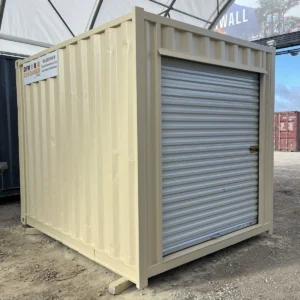
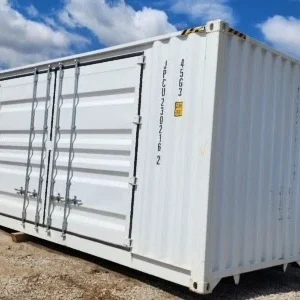
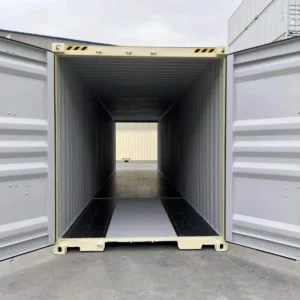
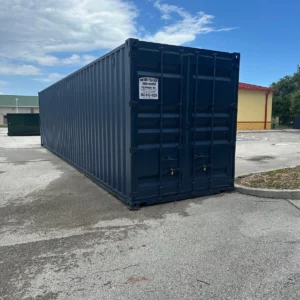
Shipping Containers for Sale, Delivered to the Lower 48
A shipping container is the cheapest weatherproof square footage you can buy that does not require a building permit in most jurisdictions, does not need a foundation, and shows up finished. We stock new one-trip boxes and used wind & watertight units in sizes from 8ft up to 45ft, and we quote flat-rate freight to any address in the lower 48. Every unit carries a 30-day guarantee.
Most of the decisions you have to make come down to three things: how much floor you need, what condition you are willing to pay for, and whether a truck can physically get to the spot you want it. This page covers all three, and links down to each size.
Container Sizes Compared
Widths are effectively fixed at 8ft across every size — the ISO standard locks it. What changes is length, height, and whether the unit is a factory-built ocean container or a modified one.
| Size | External (L×W×H) | Floor area | Internal volume | Empty weight | Typical use |
|---|---|---|---|---|---|
| 8ft | 8' × 8' × 8'6" | ~56 sq ft | ~440 cu ft | ~2,000–2,600 lb | Side yards, tool storage |
| 9ft | 9' × 8' × 8'6" | ~63 sq ft | ~500 cu ft | ~2,400–2,800 lb | Tight residential lots |
| 10ft | 10' × 8' × 8'6" | ~71 sq ft | ~560 cu ft | ~2,600–3,000 lb | Small contractors, homeowners |
| 20ft | 20' × 8' × 8'6" | ~148 sq ft | ~1,169 cu ft | ~4,850–5,100 lb | Job sites, business overflow |
| 40ft | 40' × 8' × 8'6" | ~302 sq ft | ~2,385 cu ft | ~8,200 lb | Bulk storage, best $/sq ft |
| 40ft high cube | 40' × 8' × 9'6" | ~302 sq ft | ~2,694 cu ft | ~8,750 lb | Tall equipment, conversions |
| 45ft high cube | 45' × 8' × 9'6" | ~341 sq ft | ~3,040 cu ft | ~10,500 lb | Long material, maximum volume |
Figures are nominal for dry cargo units. Tare and payload vary by manufacturer and build year — the CSC plate on the door is the authority for any individual box. Full measurements including door openings and internal clearances are in our shipping container dimensions guide.
How to Choose a Size
Work backwards from the site, not from the contents. Buyers routinely order a 40ft, then discover the truck cannot make the turn into the yard. Measure your approach first, pick the largest box that fits it, and then check whether that box holds your stuff.
On volume: a 20ft holds roughly the contents of a two- to three-bedroom house or ten floor-loaded 48×40 pallets. A 40ft holds about twenty to twenty-one pallets and doubles the floor for well under double the price. If your load is long — pipe, lumber, conduit, trusses — length matters more than square footage, and a 40ft or 45ft is the only realistic choice.
Height is a separate decision. Standard boxes give 7'10" of interior headroom; high cubes give 8'10". That extra foot is the difference between a forklift mast clearing the door and not, and it is what makes high cubes the default for anything that will later be insulated, framed, or lined.
Condition: One-Trip, Cargo Worthy, Wind & Watertight
One-trip containers are new. They were built overseas, loaded once, and shipped to a US port. Paint is factory, floors are clean, seals are original, and doors swing without a pry bar. This is what you buy if the container will be visible, converted, or expected to last decades.
Cargo worthy units have been in ocean service but still hold a valid structural survey — they can legally be loaded and shipped internationally. Expect surface rust, patched paint, and dents that do not compromise the shell.
Wind & watertight is the working storage grade. The box keeps weather out and the doors seal, but it is retired from ocean service and carries no survey. For a container that will sit on a job site holding tools and material, this is usually the right money. Our container grades guide breaks down what each survey actually certifies.
What Buyers Actually Use Them For
Job-site security is the largest single use — a steel box with a lockbox welded over the handle defeats casual theft in a way a trailer does not. Beyond that: ranch and agricultural storage, equipment dealers overwintering attachments, retail overflow inventory, records archiving, disaster recovery staging, workshop space, and conversions into offices or hunting cabins. Buyers who need the box to move regularly rather than sit are better served by a container chassis or an equipment trailer.
Delivery and Site Access
Most deliveries run on a tilt-bed or roll-off truck. The bed lifts, the container slides off the back on rollers, and the truck pulls forward out from under it. That mechanism dictates everything about site prep.
- Straight-line clearance. Budget roughly twice the container length in level, obstruction-free run, measured from where the rear of the box will land. That is about 60ft for a 20ft box and 100ft or more for a 40ft.
- Overhead. The tilt bed rises to 14–15ft. Power lines, tree limbs, gutters, and carport roofs all stop a delivery.
- Width. Allow 12ft of clear width for the truck plus mirrors, plus swing room for the turn in.
- Surface. Compacted gravel, asphalt, or concrete. Soft ground, fresh fill, and saturated turf will bury a loaded axle.
- Level. The doors are the tell. A box set out of level twists the frame, and doors that will not latch are the first symptom. Block the corners with railroad ties, concrete pads, or piers.
Where a tilt-bed cannot reach, the container goes in by crane or forklift off a flatbed. That costs more and needs to be arranged before the truck rolls — tell us at quote time.
Permits, Zoning and Placement
Rules are local, not federal. Many rural and agricultural parcels allow a container outright. Suburban lots, HOAs, and municipalities often impose setbacks, screening requirements, time limits, or an accessory-structure permit — and a few ban them outright. Anything you cut into the box (doors, windows, electrical, HVAC) is far more likely to trigger a building permit than the box itself. Check before delivery, not after, using our permits and zoning guide by state.
Related Categories
- 20ft shipping containers — the default choice for most lots and job sites
- 40ft shipping containers — the lowest cost per square foot we sell
- 45ft shipping containers — the longest ISO box built
- 10ft shipping containers — for sites a 20ft cannot reach
- Container chassis and trailers — for hauling a loaded box on the road
- Tilt deck trailers and flatbed trailers — for moving equipment alongside your container
- Shop all inventory
Frequently Asked Questions
What size shipping container should I buy?
Start with site access, not contents. A 20ft fits most driveways and commercial lots and holds roughly ten pallets. A 40ft doubles the floor for far less than double the price, but needs about 100ft of straight clearance to unload. If the approach is tight, drop to a 10ft.
How much does delivery cost?
We quote flat-rate freight to your address before you buy, so there is no per-mile surprise. Cost tracks distance from the nearest depot, container size, and how difficult the site is. Deliveries needing a crane or forklift instead of a tilt-bed cost more and must be arranged in advance.
What is the difference between a one-trip and a used container?
A one-trip container is new — built overseas, loaded once, and shipped to a US port, with factory paint and original seals. Used units are retired from ocean service and sold as cargo worthy or wind and watertight, with surface rust and dents but a sound, weathertight shell.
Do I need a permit to put a shipping container on my property?
It depends entirely on your city, county, and HOA — rules are local, not federal. Rural and agricultural land often allows containers outright, while suburban lots frequently require setbacks, screening, or an accessory-structure permit. Cutting in doors, windows, or electrical almost always triggers a building permit on top of that.
What kind of foundation does a shipping container need?
None, if the ground is firm and level. Containers carry their load through the four corner castings, so most sites just need compacted gravel with railroad ties, concrete pads, or piers under those corners. Setting a box out of level twists the frame and the doors stop latching.
Do you ship containers nationwide?
Yes. We deliver to every state in the lower 48 from Wickenburg, Arizona, with flat-rate freight quoted up front. Alaska and Hawaii are not served. Every container carries a 30-day guarantee, so if the unit does not arrive as described we make it right.