
Snowmobile Trailers & Sled Decks
Showing 13–16 of 16 results
-
Snowmobile Trailers & Sled Decks
Sale!
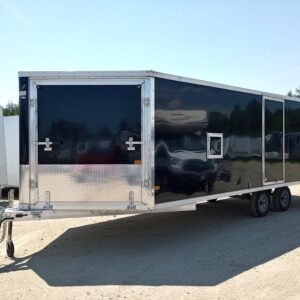
Mission Trailers 101×22 Aluminum 4-Place
Original price was: $5,000.$4,000Current price is: $4,000. Add to cart -
Snowmobile Trailers & Sled Decks
Sale!
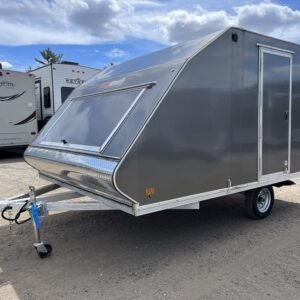
Sno Pro 101×12 Aluminum 2-Place Snowmobile Trailer w/Galvanized Package
Original price was: $4,700.$3,760Current price is: $3,760. Add to cart -
Snowmobile Trailers & Sled Decks
Sale!
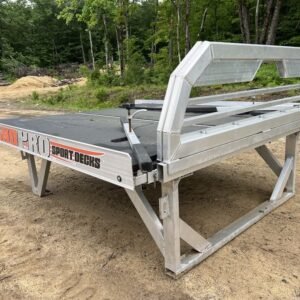
Sno Pro 7ft Aluminum Sled Deck w/Sliding Sides & Telescoping
Original price was: $2,000.$1,600Current price is: $1,600. Add to cart -
Snowmobile Trailers & Sled Decks
Sale!

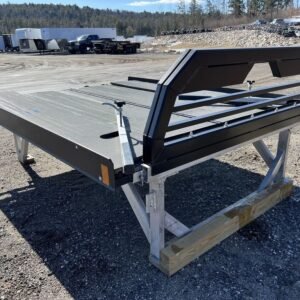
Sno Pro 8ft Powder Coated Sled Deck
Original price was: $2,000.$1,600Current price is: $1,600. Add to cart
Getting Sleds to Snow Without Wrecking Them
A snowmobile trailer is judged on two mornings a year: the one where you load in the dark at home, and the one where you load a wet, iced-up sled at a trailhead with your hands going numb. Everything that matters — ramp geometry, deck width, whether the mats are already in it, whether the guides line the skis up without you steering — is decided by which layout you buy. The units in this category are aluminum, which is the standard for this job for one obvious reason: the trailer spends its working life in road salt.
Inline, Crossover and Drive-In/Drive-Out
Three layouts cover almost everything stocked here, and they load in genuinely different ways.
Inline decks park sleds nose-to-tail on a narrow deck — the 60" x 12' single-place and the 101" wide 2-place models are the common sizes. They tow easily behind a half-ton, store in a normal driveway, and back into a garage. The trade-off is that loading is sequential: the last sled on is the first off.
Crossover and hybrid decks angle the sleds across the deck so you get more machines onto a shorter trailer than a pure inline layout allows. The stocked 101" x 12' 2-place crossover and hybrid models are the popular size, and several ship with side-by-side, galvanized or blackout packages already fitted.
Drive-in/drive-out decks are the ones you want when loading time actually costs you something. Ramp doors at both ends let sleds run straight on at one end and off the other, so nobody is reversing a machine off a narrow deck in the dark. Stocked in 7.5' x 14' 2/3-place, 7' x 24' 4-place and 7.5' x 22' 4-place, and in a 101" x 24' deckover 4/5-place.
How Many Places Do You Actually Need?
Buy for the trips you take most, not the once-a-season group ride.
Single place makes sense for one rider with one machine and limited storage. It is the cheapest thing to tow and the easiest thing to park.
2-place is the volume seller because it covers a rider plus a partner or a spare machine, and a 101" x 12' still fits a normal garage bay.
3-place and 4-place is family and riding-group territory. Once you are at four machines the drive-in/drive-out and deckover layouts start to earn their price back in loading time and in not having to shuffle sleds.
4/5-place deckover puts the deck above the wheels for full usable width edge to edge. It is the most capacity per foot of trailer, and it is the layout to look at if you are hauling wide-track or mountain sleds that do not fit neatly between fenders.
The Options That Matter in February
Track mats protect the deck from carbide and lug wear and stop the studs chewing through the floor. Several stocked units include them; on the ones that do not, budget for them anyway.
Ski guides line the machine up as it comes on so you are not correcting steering halfway up the ramp. On a 2-place crossover this is the difference between a ten-second load and a three-minute one.
Tapered ramps and ramp doors reduce the break-over angle where the ramp meets the deck. Long-tunnel and mountain sleds hang up on steep transitions; a tapered approach avoids scraping the tunnel or catching the rear bumper.
Rear canopies keep the loading area clear of falling snow and give you somewhere out of the wind to gear up.
Galvanized packages add corrosion protection to steel components on an otherwise aluminum trailer — the fasteners, brackets and hardware that road salt attacks first.
Extra height is worth specifying if you are hauling tall windshields, mountain sleds or racks.
Interior spare mounts keep the spare out of the weather and out of the way instead of hanging on the tongue collecting slush.
Sled Decks
A sled deck is not a trailer. It is a platform that mounts in a pickup bed so the truck carries the machines and the hitch stays free — for a fuel trailer, a toy hauler, or nothing at all. It also means one vehicle to park at a crowded trailhead and no trailer to back up on an unplowed road. Stocked in a 7' aluminum version with sliding sides and a telescoping ramp, and an 8' powder coated model.
Before you buy one, check three things: your truck bed length and whether the deck overhangs, your payload rating with the deck plus machines plus passengers and fuel, and how you plan to load — a telescoping ramp needs room behind the truck to deploy.
Personal Watercraft Trailers
The single-place aluminum PWC trailer stocked here uses adjustable bunks, so it can be set to the hull rather than the other way round. Aluminum construction matters even more on a watercraft trailer than a snowmobile one, because this trailer gets backed into water on purpose several times a week all summer.
Brands and Delivery
Stocked brands include Sno Pro, Mission, High Country, E-Z Hauler, Alum Line, Cargo Pro and Karavan. Every unit ships nationwide from HR Trailer Service LLC with a 30-day hassle-free return policy. Call or email us with your ZIP for a freight quote and current lead time, and tell us which sleds you are hauling — deck length and ramp choice depend on the machines more than on the number of them.
Frequently Asked Questions
What size snowmobile trailer do I need for two sleds?
A 101" x 12' deck is the standard two-place size and handles most trail sleds while still fitting a normal garage bay. If you ride long-tunnel or mountain machines, look at the 2/3-place 7.5' x 14' instead, because the extra length gives you room for the tunnel and a gentler ramp break-over angle. Measure your longest sled before ordering rather than going by seat count alone.
What is the difference between an inline and a crossover snowmobile trailer?
An inline deck carries sleds nose-to-tail on a narrow deck, so it tows and stores easily but unloads in the order it was loaded. A crossover or hybrid deck angles the machines across the deck, fitting the same number of sleds on a shorter trailer and making individual machines easier to get at. Crossovers are wider; inlines are longer and narrower for the same capacity.
Are these snowmobile trailers aluminum or steel?
The trailers in this category are aluminum, which is the standard for snowmobile hauling because the trailer spends its life in road salt and aluminum will not rust. Some models add a galvanized package to protect the steel fasteners, brackets and hardware that are still present on any aluminum trailer. One of the two sled decks is aluminum and one is powder coated steel.
Do I need track mats and ski guides?
Track mats protect the deck floor from carbide and stud wear and are worth having on any trailer that carries studded machines. Ski guides align the skis as the sled comes up the ramp so you are not correcting steering mid-load, which matters most on narrow decks and in the dark. Several stocked units include one or both; check the listing and add them if not.
Is a sled deck better than a snowmobile trailer?
They solve different problems. A sled deck rides in the pickup bed, leaves the hitch free, gives you one vehicle to park at a busy trailhead, and never has to be backed up on an unplowed road. A trailer costs less, does not consume truck payload, and does not need a loading ramp setup. Check your truck's payload rating with deck, machines, fuel and passengers before choosing a deck.
Can these trailers haul ATVs or side-by-sides instead?
Some can. Several of the crossover models are stocked with a side-by-side package, and the drive-in/drive-out and deckover layouts suit wheeled machines well because you are not reversing off a narrow deck. Check the deck width and the ramp rating against your machine's width and weight, and call us if you are unsure which stocked unit fits what you are hauling.