
Steel Utility Trailers
Showing 13–24 of 40 results
-
Utility Trailers
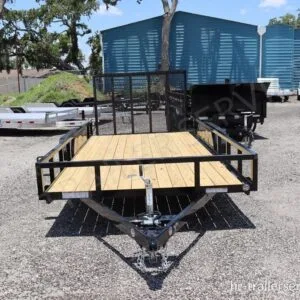
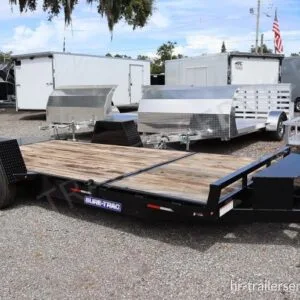
2025 Sure-Trac 7×16 Tube Top Utility Trailer (7K GVWR)
$4,735 Add to cart -
Utility Trailers
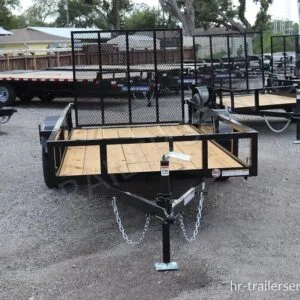
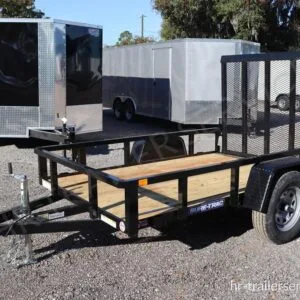
2025 Triple Crown 5×10 Utility Trailer with Gate (2.75K GVWR)
$1,790 Add to cart -
Utility Trailers
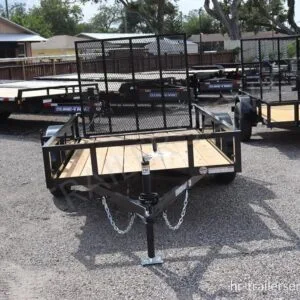
2025 Triple Crown 5×8 Utility Trailer with Gate (2.75K GVWR)
$1,690 Add to cart -
Utility Trailers

2025 Triple Crown 6×14 Tandem Axle Utility Trailer (5.5K GVWR)
$3,375 Add to cart -
Utility Trailers
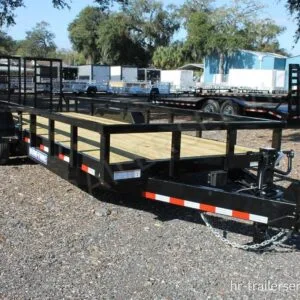
22ft Heavy Duty Equipment Trailer with Ramp Gate
$2,999 Add to cart -
Utility Trailers
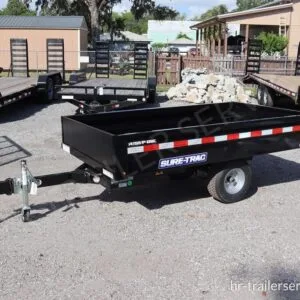
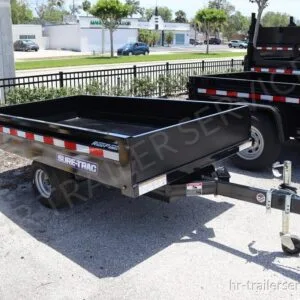
4.5 x 8ft Utility Dump Trailer with a Hydraulic Pump
$3,960 Add to cart -
Utility Trailers
4.5x8ft Utility Dump Trailer with a 12 Volt Battery
$3,960 Add to cart -
Utility Trailers
5×10 Tube Top Utility 3k Idler
$9,500 Add to cart -
Utility Trailers
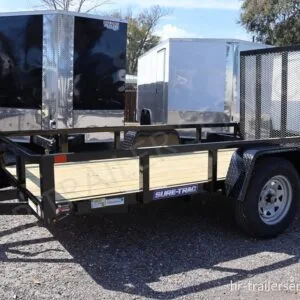
5×8 Tube Top Utility Single Axle
$4,999 Add to cart -
Utility Trailers
6.5×14 Tilt Bed Equipment Trailer
$7,000 Add to cart -
Utility Trailers
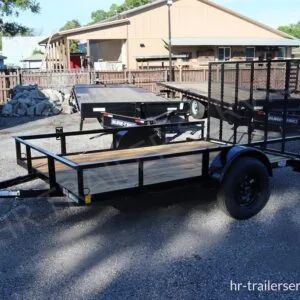
6×10 Open Steel Utility Trailer with 2″ Coupler
$1,925 Add to cart -
Utility Trailers
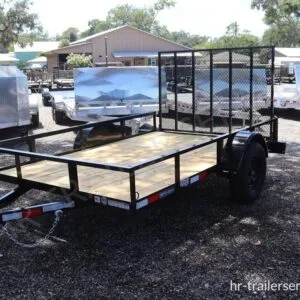
6×10 Utility Trailer with Gate – Black (2026 Triple Crown)
$1,990 Add to cart
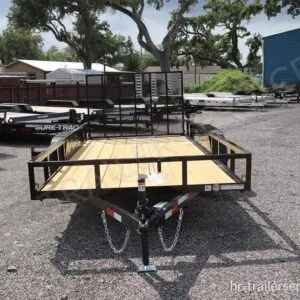
Steel Utility Trailer Sizes & Capacities
Steel wins on one metric that matters to working owners: dollars per pound of capacity. A steel utility trailer typically costs 30–50% less than the same size in aluminum, and when a loader bucket clips the rail or a pallet corner gouges a crossmember, any competent welder in any town can fix it for a hundred dollars. That repairability is the whole argument. Below are the sizes we move most, with the frame steel each is normally built from.
| Size | Typical Frame Steel | GVWR | Empty Weight | Best Suited To |
|---|---|---|---|---|
| 5' x 10' single | 2" x 2" x 1/8" angle rail, 3" channel tongue | 2,990 lb | ~800 lb | Homeowner hauling, debris runs |
| 6' x 12' single | 2" x 3" angle rail, 5" channel tongue | 2,990 lb | 1,000–1,250 lb | Lawn crews, one mower plus gear |
| 6.5' x 12' tandem | 3" channel frame, 3" channel tongue | 7,000 lb | 1,650–1,900 lb | Materials, firewood, mixed loads |
| 7' x 14' tandem | 3" channel frame, 5" channel tongue | 7,000 lb | 1,900–2,300 lb | Everyday contractor trailer |
| 7' x 16' tandem | 4" channel frame, 5" channel tongue | 9,990 lb | 2,400–2,700 lb | Skid steers, compact tractors |
| 8.5' x 18' tandem | 5" channel frame, 6" channel tongue | 9,990–14,000 lb | 2,900–3,600 lb | Attachments, pallets of block, heavy gear |
| 8.5' x 20' tandem | 6" channel or I-beam mainframe | 14,000 lb | 3,300–4,000 lb | Machinery, deckover-style hauling |
How to Choose the Right Steel Utility Trailer
- Read the frame spec, not the marketing. Two 7' x 14' trailers can differ by 500 lb of steel. Ask for the main rail size (angle vs. channel vs. tube), the crossmember spacing, and the tongue channel depth. Crossmembers on 16" centers under a 3" channel frame will outlive 24" centers under light angle every time.
- Decide how you'll load it. A fold-flat ramp gate frees the entire deck length and doubles as a loading dock. Slide-in ramps keep the rear clear for a walk-behind. Tilt beds remove the ramp problem entirely — see tilt deck trailers.
- Pick the coating before the color. Powder coat over a blasted or acid-dipped surface is the durable finish. Primer-and-enamel is cheaper and touches up easily but chalks in 2–3 seasons. Hot-dip galvanized costs the most and is the only finish that genuinely shrugs off road salt and coastal air.
- Check the axle brand and rating. Dexter and Lippert axles carry parts availability everywhere; obscure imports don't. A 5,200 lb axle pair (9,990 lb GVWR) is the sweet spot for contractors who need real payload but want to stay under the 10,000 lb registration threshold.
- Confirm brake coverage. Brakes on both axles stop far better than brakes on one, especially loaded downhill. If a quote is unusually low, single-axle braking is often why.
Steel Construction, Corrosion, and Long-Term Ownership
Most utility trailer frames are built from A36 structural steel — angle, channel, or rectangular tube. Tube frames resist twist best and hide the wiring inside, channel gives the best strength for the money, and angle iron is fine at the light end but flexes on long, heavily loaded decks. Welds matter as much as the steel: continuous welds at the crossmember-to-rail joints hold up better than stitch welds, which is where cracks usually start after a few thousand rough miles.
Rust is the honest weakness. Steel that sits loaded and wet under a tarp corrodes from the deck down, and salted winter roads attack the underside first. Three habits add years: rinse the frame after winter towing, keep the decking free-draining rather than sealed to the crossmembers, and touch up chips before the first orange bloom spreads. Galvanized or heavily powder-coated frames make this far less of a chore.
The other steel advantage is stability. A heavier trailer is a calmer trailer — more resistant to crosswind, less prone to sway from passing trucks, and less likely to get pushed around by an off-center load. Owners hauling loose material, scrap, or anything that shifts generally prefer the mass.
Decking on steel trailers is usually 2" pressure-treated pine on 16" centers. Upgrade to rough-cut oak if you'll be running tracked machines or dragging steel across the deck; oak takes gouging far better and costs less than aluminum plank. Expect treated pine to need replacing after roughly 5–8 years of outdoor storage, sooner if the trailer lives under trees.
Delivery & Buying Online
Steel utility trailers ship nationwide to the lower 48 with a flat-rate freight quote given up front, so the number you're quoted is the number you pay. All orders are backed by a 30-day guarantee. Tell us your tow vehicle and heaviest expected load and we'll confirm the axle rating and hitch class before anything ships.
Related Categories
If weight savings matters more than price, compare these against aluminum utility trailers. For an overview of both, start at the utility trailer category. Contractors moving machinery should look at equipment trailers or flatbed trailers, and anyone tired of shoveling should price a dump trailer. Axles, springs, and brake assemblies are in trailer parts.
Frequently Asked Questions
Is a steel utility trailer better than aluminum?
Steel is better for abuse, budget, and repairability; aluminum is better for weight and corrosion resistance. A steel trailer costs 30 to 50% less and can be welded anywhere. Aluminum saves 400 to 800 lb in the same size and won't rust. Choose based on load type and tow vehicle.
How long does a steel utility trailer last?
A powder-coated steel utility trailer commonly lasts 15 to 20 years with basic maintenance, and galvanized frames last longer. The wood deck is the first thing to go, usually at 5 to 8 years. Rust from road salt is the main limiting factor in northern states.
What gauge steel is used in utility trailers?
Frames use structural shapes rather than sheet gauge: 2" angle on light single-axle models, 3" to 5" channel on tandems, and 6" channel or I-beam on 14,000 lb units. Sheet metal fenders are typically 14 to 16 gauge. Ask for the main rail size when comparing quotes.
How do I stop a steel trailer frame from rusting?
Rinse the underside after towing on salted roads, touch up paint chips before rust spreads, and keep the deck draining freely instead of trapping water against the crossmembers. Powder coat over a blasted surface resists far better than primer and enamel; hot-dip galvanizing is the best available option.
What's the biggest steel utility trailer I can tow without a CDL?
In most states you can tow up to a 10,000 lb GVWR trailer for personal use without a CDL, which is why 9,990 lb models are so common. CDL rules generally trigger above 26,001 lb combined weight with a trailer over 10,000 lb. Commercial use adds DOT requirements at lower thresholds.
Should I get pressure-treated pine or oak decking?
Choose oak if you load tracked machines, drag steel, or work the trailer daily; it resists gouging far better. Pressure-treated pine is cheaper, lighter, and fine for general hauling, lasting roughly 5 to 8 years outdoors. Both need free drainage to reach their expected life.