
Truck Beds
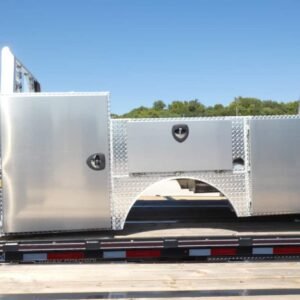
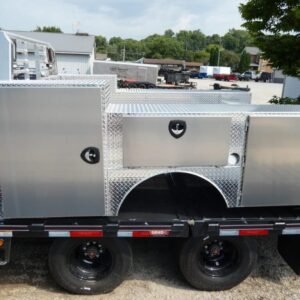
Replacing a Pickup Box With Something That Works
A factory pickup box is a compromise built for a showroom. A flatbed or service bed is built for a job: full-width deck with no wheel wells eating usable space, a rated gooseneck ball already in the floor, a rear receiver, headache rack options, and on service bodies, locking compartments that turn the truck into a rolling shop. Ranch trucks, welding rigs, hotshot outfits and utility fleets all end up here for the same reason — the stock box runs out of capability long before the truck does.
We stock steel beds from Zimmerman and aluminum beds and gooseneck service bodies from Martin, in the sizes that actually fit three-quarter-ton, one-ton and cab-and-chassis trucks.
Getting the Size Right
Two truck measurements decide everything. First, rear wheel configuration — single rear wheel (SRW) or dual rear wheel (DRW). Duals need a wider deck to cover the tires, which is why dually beds run 97" to 98" wide while single-wheel beds are typically 84". Second, cab to axle (CA): measure from the back of the cab to the center of the rear axle. On a cab-and-chassis truck that number is stamped in the spec; on a pickup you measure it. CA determines bed length, and getting it wrong leaves you with either a deck hanging out past the point of usefulness or one that ends short of the axle.
| Bed size | Typical truck fit | Material |
|---|---|---|
| 84" x 84" | SRW short-bed pickup (6.5' box), ~56" CA | Steel |
| 84" x 102" | SRW long-bed pickup (8' box), ~60" CA | Steel |
| 84" x 104" | SRW long-bed pickup / light cab & chassis | Aluminum |
| 97" x 102" | DRW pickup or cab & chassis, ~60" CA | Steel |
| 98" x 104" | DRW pickup, ~60" CA | Aluminum |
| 98" x 110" – 98" x 112" | DRW cab & chassis, ~60"–84" CA | Aluminum (flatbed, skirted or gooseneck service body) |
Manufacturers do not all list dimensions the same way, so confirm which figure is width and which is length before ordering. Legal deck width tops out at 102" in most highway use, which is why you will not find a wider bed for an on-road truck.
Steel or Aluminum
Aluminum saves weight — commonly 300 to 500 lb compared with a similarly sized steel bed. That weight comes straight back as payload, and on a truck that already runs close to its GVWR, it is real capacity, not marketing. Aluminum also does not rust, which matters if the truck lives in road salt or hauls fertilizer, manure or livestock waste. Steel costs substantially less for the same size, takes abuse from chains, forks and rock without denting as easily, and any competent shop can weld a repair or add a bracket in an afternoon. Neither is wrong. If the truck is a long-term keeper working in corrosive conditions or is payload-limited, aluminum pays back. If it is a work truck that gets beaten and eventually replaced, steel is the smarter dollar.
How to Choose a Truck Bed
- Measure cab to axle first. Everything downstream depends on it. Back of cab to rear axle centerline, in inches.
- Confirm SRW or DRW. A dually needs the wide deck. Putting an 84" bed on a dually leaves the outer tires exposed and unlawful in most states.
- Decide flatbed versus service body. A plain flatbed gives maximum open deck. A skirted bed adds under-deck boxes. A gooseneck service body adds full lockable side compartments and costs more and weighs more — buy it only if the tool storage is a daily need.
- Check what you are towing. If a gooseneck trailer is in the picture, the deck ball and its rating matter more than anything else on the bed. Read gooseneck vs bumper pull if you are still choosing a hitch style.
- Watch payload math. Bed weight comes out of your payload allowance. Add bed weight, hitch weight and cargo before assuming the truck handles it — our guide to GVWR, GAWR, payload and tongue weight covers the arithmetic.
- Plan the install. You need a forklift or hoist and a wiring adapter. Budget for both.
Hitch Ratings, Wiring and Installation
The gooseneck ball molded into a flatbed truck bed is usually rated in the 25,000 to 30,000 lb gross trailer weight range, and rear receivers commonly 18,000 to 30,000 lb depending on the bed. Those are ceilings for the hitch hardware only. Your actual limit is whichever is lowest of the truck's GCWR, its rear axle rating, the hitch rating and the trailer's own GVWR. A 30,000 lb ball on a truck rated to pull 21,000 lb means you can pull 21,000 lb.
Installation is straightforward but not trivial. The factory box comes off after unbolting eight to ten body bolts and disconnecting the tail light harness and fuel filler. The new bed sits on the frame rails, bolts down, and gets wired through a truck-specific adapter harness. Late-model trucks often need a bypass or converter module so the body computer does not throw bulb-out faults when it stops seeing factory LED assemblies. Most new beds ship with DOT stop, turn, tail, clearance and license lighting already installed. Plan on a few hours' shop labor if you are not doing it yourself.
Delivery & Buying Online
Truck beds ship freight nationwide to the lower 48, quoted flat-rate before you order, and covered by our 30-day guarantee. Beds arrive crated or strapped on a flatbed and need a forklift or dock to unload — tell us your delivery situation up front and we will build the quote around it.
Related Categories
A new deck ball usually means a new trailer behind it: see gooseneck trailers, flatbed trailers and equipment trailers for what the bed will be pulling. Ranch buyers spec'ing a flatbed truck almost always pair it with a livestock trailer. For deck balls, receivers, lighting and wiring components, browse trailer parts.
Frequently Asked Questions
What size truck bed do I need?
Match bed width to your rear wheel configuration and bed length to your cab-to-axle measurement. Single-rear-wheel trucks typically take an 84" wide bed, while duallys and cab-and-chassis trucks take 97" to 98". Measure from the back of the cab to the rear axle centerline before ordering anything.
Should I buy a steel or aluminum truck bed?
Aluminum saves roughly 300 to 500 lb over a comparable steel bed and will not rust, which matters on payload-limited trucks and in road salt. Steel costs substantially less, resists impact damage better, and any shop can weld repairs or add brackets. Both work well; usage and budget decide.
What is the gooseneck ball in a flatbed truck bed rated for?
Most flatbed truck bed gooseneck balls are rated between 25,000 and 30,000 lb gross trailer weight, with rear receivers commonly rated 18,000 to 30,000 lb. Those are hitch hardware ceilings only. Your real limit is the lowest of truck GCWR, rear axle rating, hitch rating and trailer GVWR.
Can I install a truck bed myself?
Yes, if you have a forklift or overhead hoist, hand tools and a helper. The factory box unbolts at eight to ten body bolts after disconnecting the light harness and fuel filler; the new bed bolts to the frame rails and wires through an adapter. Most shops charge a few hours' labor.
Do truck beds come with lights and wiring?
Most new flatbed and service beds ship with DOT stop, turn, tail, clearance and license lighting already installed, plus a wiring pigtail. You will still need a truck-specific adapter harness, and many late-model trucks require a bypass module so the body computer does not report bulb-out faults.
What is a gooseneck service body?
A gooseneck service body combines an open flatbed deck with enclosed, lockable side compartments and a rated gooseneck ball in the deck. It suits welders, ranchers and service crews who need onboard tool storage and still tow heavy. It costs more and weighs several hundred pounds more than a plain flatbed.