
20ft Shipping Containers
Showing 13–17 of 17 results
-
Shipping Containers
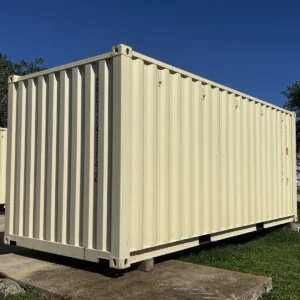
New 20′ Shipping Container Cargo Container
$3,000 Add to cart -
Shipping Containers
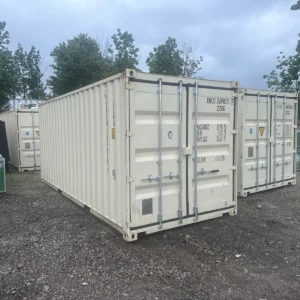
New 20ft Open Side Shipping Container – One Trip
$5,500 Add to cart -
Shipping Containers
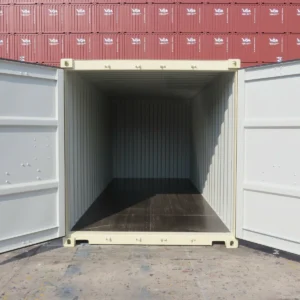
One trip (New) 20′ Shipping Container
$3,000 Add to cart -
Shipping Containers

Refrigerator Container- 20ft 2017 Reefer
$11,000 Add to cart -
Shipping Containers
Shipping container 20 ft Insulated Greenhouse
$11,000 Add to cart
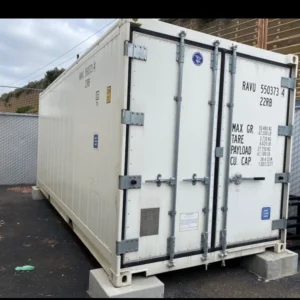
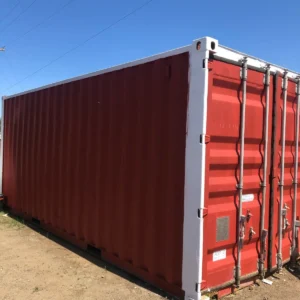
20ft Shipping Containers for Sale
The 20ft is the container most buyers should default to. It holds about 148 sq ft of secured floor — enough for a two- or three-bedroom household, a full contractor's tool and material inventory, or ten floor-loaded pallets — and it fits on sites that a 40ft simply cannot reach. It is the size we sell most of, and the size that goes wrong least often.
We carry new one-trip 20ft boxes and used wind & watertight units, with flat-rate freight quoted to any address in the lower 48 and a 30-day guarantee on every unit.
20ft Container Specifications
| Specification | 20ft Standard | 20ft High Cube |
|---|---|---|
| External L × W × H | 20'0" × 8'0" × 8'6" | 20'0" × 8'0" × 9'6" |
| Internal L × W × H | 19'4" × 7'8" × 7'10" | 19'4" × 7'8" × 8'10" |
| Door opening (W × H) | 7'8" × 7'6" | 7'8" × 8'5" |
| Floor area | ~148 sq ft | ~148 sq ft |
| Internal volume | ~1,169 cu ft | ~1,320 cu ft |
| Tare (empty) weight | ~4,850–5,100 lb | ~5,200 lb |
| Max payload | ~62,000 lb | ~62,000 lb |
| Max gross weight | 67,200 lb | 67,200 lb |
Nominal figures for dry cargo units — check the CSC plate on the right-hand door for the actual tare and rating of a given box. Note that 20ft high cubes are genuinely uncommon in the used market; the ocean fleet standardised on 8'6" for 20ft boxes and 9'6" for 40ft. If you need one, ask, and expect a one-trip unit rather than a used one. Comparative measurements for every size are in our shipping container dimensions guide.
Why the 20ft Is the Default Choice
Three reasons, in order of how often they decide the sale.
It fits. A 20ft needs about 60ft of straight clearance to unload — a figure most residential driveways, commercial parking lots, ranch approaches, and fenced yards can actually produce. A 40ft needs 100ft and rules out a large share of sites outright.
It can be moved. An empty 20ft weighs under 5,100 lb and is short enough that a 15,000 lb forklift with proper forks, a telehandler, or a tow operator with a roll-back can reposition it. That flexibility disappears at 40ft, where relocation means booking the same delivery-grade truck again.
The capacity matches real demand. Ten 48×40 pallets on the floor, or roughly 1,169 cu ft. For most buyers that is the entire problem solved, and the extra 154 sq ft in a 40ft would sit empty while costing freight and site space.
Job-Site and Business Storage
This is the 20ft's home ground. On construction sites it functions as a lockable tool crib, material store and break-out shelter in one, and it is short enough to tuck against a fence line without eating parking. Contractors typically weld a lockbox over the door handle — a hardened steel shroud that covers a puck lock and defeats bolt cutters and pry bars, which the standard cam handles alone do not.
On the commercial side, 20ft boxes handle retail and restaurant overflow inventory, seasonal stock, records archiving, parts storage for equipment dealers, and staging for landscape and irrigation crews. Agricultural buyers use them for feed, tack, chemical storage and implement parts, well away from the barn. Where the load is long — pipe, conduit, lumber, trusses — the 19'4" internal length becomes the limiting factor and a 40ft is the better call.
Delivery: Driveway-Friendly, With Conditions
A 20ft ships on a tilt-bed or roll-off truck that raises its bed and rolls the box off the back while pulling forward. What you need:
- About 60ft of straight, level run behind the drop point, plus room for the truck ahead of it — call it 100ft of total working length.
- 14ft of overhead clearance. The tilt bed rises. Low branches, service drops, carport roofs and gutter lines stop the job.
- 10–12ft of clear width for the truck and mirrors, with swing room at any turn onto the site.
- A firm surface. Gravel, asphalt or concrete. Wet lawn and fresh fill will bury the rear axles, and recovery is on the customer.
- Four blocking points. Containers carry load through the corner castings, so set railroad ties, concrete pads or piers under all four. Get it level and the doors latch; get it wrong and they will not.
Tight urban lots and back yards sometimes require a crane or forklift set off a flatbed instead. That is arrangeable, costs more, and needs to be agreed before dispatch.
Picking a Condition Grade
For yard and job-site storage, used wind & watertight is normally the right money — retired from ocean service, cosmetically weathered, sealed against rain, and priced accordingly. Step up to cargo worthy only if the box will be shipped internationally again, and to new one-trip if appearance matters or the unit will be converted into an office, shop or living space. Our container grades explained guide covers what each survey actually certifies so you are not paying for a designation you do not need.
Related Categories
- 40ft shipping containers — double the floor, much tighter access requirements
- 10ft shipping containers — when 60ft of clearance is still too much
- All shipping containers — compare every size we stock
- Container chassis and trailers — road transport for a loaded 20ft
- Equipment trailers and tilt decks — job-site hauling alongside your container
- Shop all inventory
Frequently Asked Questions
How much does an empty 20ft container weigh?
Roughly 4,850 to 5,100 lb depending on manufacturer and build year, with the exact tare stamped on the CSC plate at the right-hand door. Maximum gross weight is 67,200 lb, which leaves about 62,000 lb of payload — far more than most storage buyers will ever load.
Will a 20ft container fit in my driveway?
Usually, if you have about 60ft of straight, level run behind the drop point, 14ft of overhead clearance, and 10 to 12ft of width. The tilt-bed truck cannot turn while unloading, so the approach has to be straight. Measure before ordering.
How many pallets fit in a 20ft container?
Ten standard 48x40 US pallets floor-loaded in a single layer, or eleven Euro pallets. Stacking roughly doubles that if your goods allow it and the load stays under the 7'10" interior height. Total usable volume is about 1,169 cu ft across roughly 148 sq ft of floor.
Can I put a 20ft container on grass or dirt?
Not directly. Bare soil settles unevenly, holds moisture against the frame, and racks the box until the doors stop latching. Set railroad ties, concrete pads or piers under the four corner castings on compacted ground. The delivery truck also needs a firm surface to reach the spot.
Are 20ft high cube containers available?
They exist but are uncommon. The ocean fleet standardised on 8'6" for 20ft boxes and reserved the 9'6" high cube for 40ft and 45ft units, so used 20ft high cubes are scarce. When we can source one it is normally a new one-trip unit rather than used.
Can a forklift move a 20ft container?
An empty one, yes — a 15,000 lb capacity forklift with long forks, a telehandler, or a container handler can reposition a 20ft box on site. Loaded is a different matter, and lifting from the sides rather than the corner castings risks bending the frame.